Last updated: October 29, 2026
Key Takeaways
- Modern style feels calm by cutting visual noise, not by stripping out personality.
- Start with large surfaces and fewer pieces; that sets the tone faster than accessory swaps.
- Add one or two warm materials so the room stays inviting within a restrained palette.
- Use clean lines as the room’s structure, then vary height, weight, and finish to avoid a blank look.
Modern decorating ideas for a clean, simple home are built on clean lines, a restrained palette, and fewer, better-chosen pieces. If a room feels busy, the fix is usually not “buy more modern things,” but edit the room until the structure shows: light, line, material, and space.
What modern decorating style actually looks like in a home
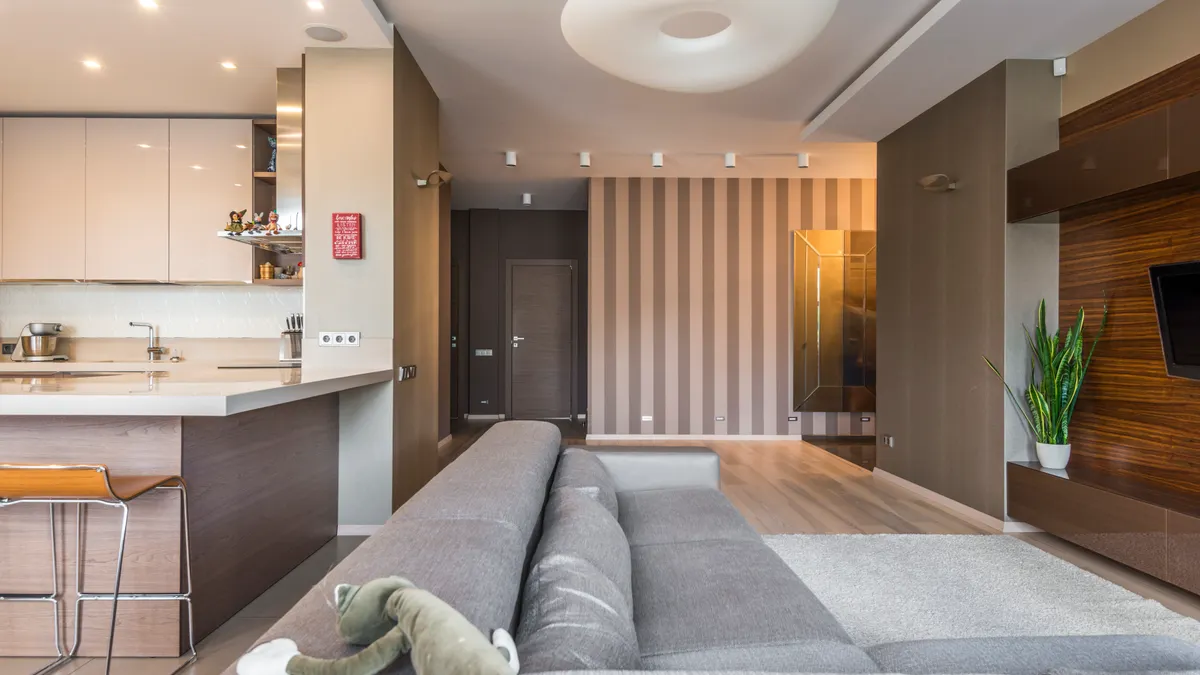
Modern decorating style looks calm because it reduces visual noise, not because it removes personality. The style is defined by straight or gently geometric silhouettes, open floor area, and a limited set of finishes that repeat from room to room. A neutral sofa, a glass table, a metal lamp, black hardware, geometric art, and one wood accent can do more work than a room full of small accessories.
The mistake many people make is confusing modern with bare. A home that only has white walls and empty shelves can feel unfinished, not modern. The better target is clarity: every object should seem intentional. That usually means one major focal point per wall or zone, and only a few secondary pieces.
Modern decor also depends on proportion. A 72-inch sofa in a small room may be too bulky if paired with heavy arms and a thick skirt, while a low-profile sofa with slim legs keeps the room visually light. The same logic applies to tables and lamps. A round glass side table takes less visual weight than a solid wood cube, and a metal lamp with a narrow stem reads cleaner than a chunky base.
This style is not for someone who wants layered ornament, romantic curves, or a collected antique look. If the goal is cozy maximalism or ornate traditional detail, modern decorating will feel too stripped back. That is not a flaw. It is the point.
Which modern decorating ideas work first in any room?
Start with the largest surfaces and the fewest items, because those choices set the tone faster than any accessory swap. In a modern room, the sofa, rug, lighting, and wall art do most of the visual labor. If those four pieces are off, no tray or pillow will rescue the room.
So use this order:
- Choose one neutral base piece first. Pick a neutral sofa in beige, taupe, gray, ivory, or soft charcoal. A sofa in one of these colors gives the room a calm field instead of a pattern fight.
- Add one hard-edged table. A glass table, lacquered table, or slim wood accent table adds shape without heaviness. Keep the top mostly clear so the room still reads open.
- Install statement lighting. A metal lamp, pendant, or ceiling fixture with a clean silhouette creates the modern line the room needs. A simple drum shade or dome shape often works better than decorative scrollwork.
- Limit the wall to one strong image. Use geometric art or a single large-scale print rather than many small frames. One piece at 24 x 36 inches or larger often feels more intentional than a cluster of tiny art.
- Repeat one finish twice. Black hardware, matte black lamp bases, or black picture frames can be repeated in the room so the design feels connected instead of random.
- Add one natural material. A wood accent, woven basket, or oak sideboard keeps the room from looking clinical. One warm surface usually does more than five small “cozy” objects.
- Stop before the room feels full. Leave visible surface and floor space. In a modern room, empty space is part of the design, not leftover room.
The result to expect is a room that looks edited in 20 minutes, even if the pieces were chosen over several weeks. The trade-off is obvious: you get less display space for collectibles. If your style depends on many keepsakes, modern decorating will require stricter curation.
For a broader framework on how style systems work across the home, I’d point to the hub on style-based decorating systems as the next step. You can also compare approaches in minimalist decorating ideas, neutral living room ideas, and small space decorating ideas.
How do I keep a modern room from feeling cold?
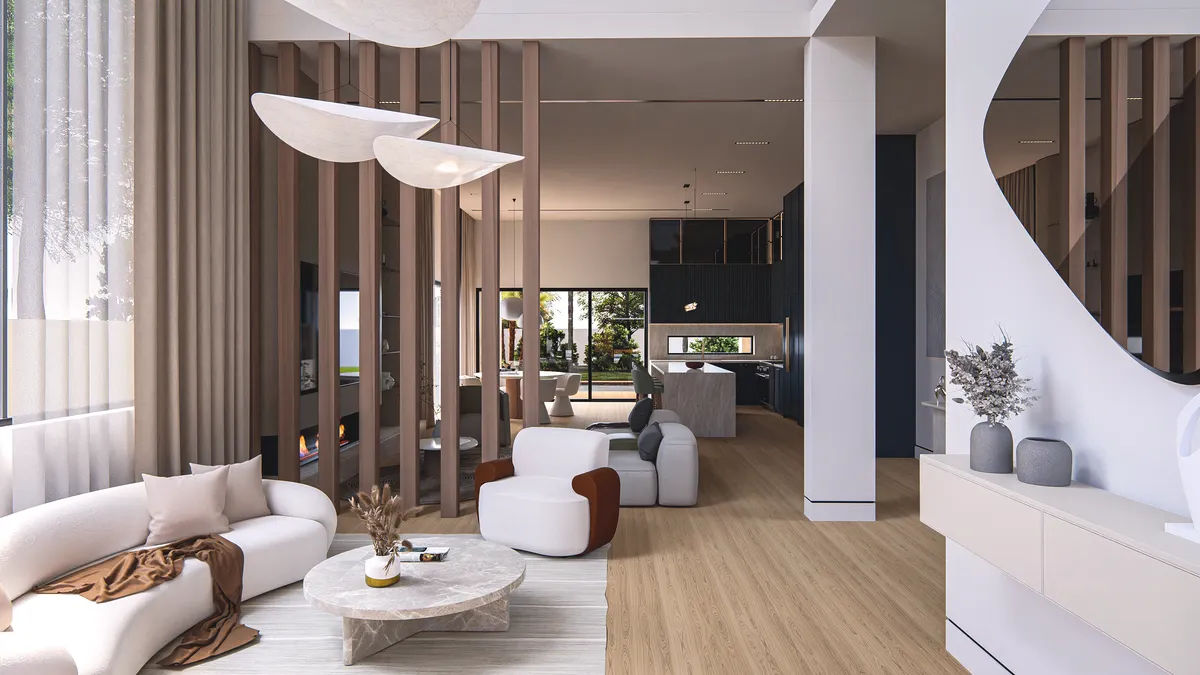
Keep a modern room from feeling cold by mixing one or two warm materials into an otherwise restrained palette. The answer is not more color everywhere; it is contrast in texture and tone.
A room becomes cold when every surface is smooth, pale, and hard at the same time. Think glossy white walls, chrome, clear glass, and a pale rug with no grain. The fix is to introduce a wood accent, a woven shade, an upholstered chair, or a matte finish. These soften the reflection without breaking the modern look.
Use temperature in layers:
- Paint: warm white or soft greige reads gentler than blue-white.
- Upholstery: a neutral sofa in textured fabric feels warmer than shiny leather in a stark room.
- Wood: oak, walnut, or ash adds grain and depth.
- Textiles: one throw or pillow with visible weave is enough to change the feeling of a seating area.
- Lighting: use a metal lamp with a warm bulb, not a harsh overhead source alone.
This is where people overcorrect. They add candles, dozens of pillows, ruffles, and baskets until the room stops looking modern altogether. That costs the room its crispness. Instead, use one soft material against a clean-lined shell. A wool throw on a neutral sofa, or a wood accent table beside a glass table, gives the room balance without clutter.
The practical limit is simple: if you cannot describe the room in three materials or fewer, it probably has too much going on. Modern rooms usually work best with a short material list repeated on purpose. In a typical room, that restraint is easier to manage than a long list of finishes.
Use clean lines, but do not flatten the whole room
Use clean lines as the structure of the room, then vary height, weight, and finish so the space does not look blank. Modern decorating fails when every item sits at the same level, uses the same color, and has the same visual weight.
Clean lines show up in furniture profiles, trim, shelving, and lighting. A sofa with straight arms, a square coffee table, and black hardware on cabinets give the eye a predictable path. That predictability is what makes the room feel composed. But if every surface is square and every finish is matte black or white, the room can feel severe.
Break that sameness with controlled variation:
- Pair a straight sofa with a round side table.
- Put geometric art above a low credenza.
- Use a metal lamp with a slender stem next to a blocky chair.
- Mix one smooth surface, like glass, with one textured surface, like wood.
The room should still feel edited. The goal is not contrast for its own sake. A modern room needs enough difference to keep the eye moving, but not so much that each item fights the others.
A common mistake is buying “modern” pieces that are actually just plain. Plain is not the same as refined. A cheap table with rough edges or a flimsy lamp can make the whole room look unfinished, even if the shape is right. Better to choose fewer pieces with clear forms than fill the room with weak versions of the same idea.
Modern decorating ideas for lighting, hardware, and wall art
Modern decorating ideas work best when lighting, hardware, and wall art share one visual language. These three details are small individually, but together they determine whether the room looks current or accidental.
Start with lighting because it affects both function and mood. A metal lamp with a drum shade, a globe pendant, or a linear ceiling fixture often suits modern decor style better than ornate chandeliers. In rooms with low ceilings, a flush mount in a simple shape can keep the line clean. In taller rooms, a pendant over a table or island creates a strong vertical point without clutter.
Next, choose hardware that disappears into the architecture. Black hardware is one of the easiest ways to make cabinets, doors, and drawers feel crisp. Matte black tends to read cleaner than shiny chrome in a modern room because it creates a solid line instead of a reflective flash. If the rest of the room is already dark, brushed nickel or soft brass can work too, but the finish should stay understated.
For art, think in blocks and edges. Geometric art, abstract prints, and large black-and-white pieces suit this style because they echo the room’s structure. A single oversized canvas often works better than a gallery wall packed with small frames. If you do use multiple pieces, keep frame color and spacing consistent so the arrangement looks deliberate.
Do not buy all three categories from the same finish family unless you want a very flat room. A black lamp, black hardware, and black frames can feel strong, but the room still needs a lighter surface somewhere else, usually in the sofa, wall color, or rug. That contrast is what keeps modern rooms from turning into a dark box.
Why minimal accessories matter more than more decor
Minimal accessories matter more because modern style depends on the absence of crowding as much as on the objects themselves. A tray of six candles, three vases, and a stack of books can make a room feel busy even when each piece is attractive.
The rule is simple: every surface needs a job. A console table can hold one lamp and one bowl. A coffee table can hold one art book and one sculptural object. A shelf can hold books, but not every shelf needs a different color story. Leave enough open space that the pieces have air around them.
Here is the cost of excess:
- Too many small objects make the room feel fragmented.
- Too many finishes make the room feel undecided.
- Too many patterns weaken the clean-line effect.
- Too many “filler” pieces make the major furniture look less important.
Use scale instead of quantity. One larger geometric art piece, one substantial wood accent bowl, or one oversize floor vase usually reads better than several tiny decorations. This is also where budget matters. If the budget is limited, put it into one or two better pieces rather than spreading it across many small accessories. A room with a decent sofa and one strong lamp often looks more modern than a room with six cheap decor items.
This approach is not for someone who wants every shelf styled or every tabletop decorated. It asks for restraint. The upside is easier cleaning, fewer decisions, and a home that looks calm even when life is not.
Pulling the whole home into one modern look
Pulling the whole home into one modern look means repeating the same few decisions from room to room instead of redesigning each space from scratch. That repetition is what makes a home feel coherent. If one room has black hardware, neutral upholstery, and clean-lined furniture, the next room should echo at least two of those choices.
Therefore, the best repeatable elements are:
- a neutral palette with one darker anchor color
- clean-lined furniture silhouettes
- one warm wood tone
- black hardware or another consistent metal finish
- geometric art or similarly structured wall decor
- minimal accessories with one strong focal object per room
A kitchen with black hardware and a wood accent stool can connect visually to a living room with a neutral sofa and a wood coffee table. A bedroom can pick up the same language through a metal lamp and a simple headboard. The exact pieces do not need to match. The visual rules do.
The main drawback is that modern decorating can become repetitive if every room copies the same layout. Keep the palette steady, then vary the scale and function. A living room may use a glass table, while a bedroom uses a wood accent bench. A hallway may use geometric art, while a kitchen relies on hardware and lighting.
This is the cleanest way to create a home that feels pulled together without becoming stiff. Modern decor style works when the eye recognizes the pattern, even before the brain names it.
What defines modern decorating style?
Modern decorating style is defined by clean lines, restrained color, and a simple mix of materials. It favors furniture with clear shapes, open space, and a few strong pieces instead of many decorative extras. A neutral sofa, black hardware, geometric art, and a metal lamp are all typical modern moves.
How do I decorate modern without it feeling cold?
Decorate modern without it feeling cold by adding texture and one warm material. A wood accent, a woven rug, or upholstered seating softens the room without making it busy. Warm white paint and layered lighting help too, especially when paired with a neutral sofa and matte finishes.
What colors work in modern decor?
Modern decor usually works best with neutrals such as white, ivory, beige, taupe, gray, charcoal, and black. One muted accent color can be added, but the palette should stay tight. The cleanest results usually come from repeating only two or three main colors across the room.
The U.S. Environmental Protection Agency notes that indoor air can be 2 to 5 times more polluted than outdoor air, so simpler rooms can be easier to clean and maintain. See EPA indoor air quality. The National Association of Realtors’ 2023 staging data reported that 81% of buyers’ agents said staging made it easier for buyers to visualize a home as their future home, which supports the value of a visually clear, modern presentation. See NAR staging report.
Drafted with AI; not yet reviewed by a person.