Last updated: October 21, 2026
Quick Answer: Bathroom Decorating Ideas for a Clean, Spa-Like Look usually work best with 1 mirror, 1 towel set, 1 bath mat, and 1–2 decor accents. A bathroom looks clean and spa-like when the finishes are calm, the surfaces are easy to wipe down, and the few decorative pieces look chosen instead of crowded. This guide focuses on Bathroom Decorating Ideas for a Clean, Spa-Like Look that stay practical as well as polished.
Start with a spa-like bathroom plan
A spa-like bathroom starts with restraint: pick one metal finish, one main textile tone, and one or two decorative accents, then repeat them rather than adding more colors. That sounds simple, but it is the difference between a room that feels edited and a room that feels busy.
The bathroom is a moisture-heavy space, so the most successful decor is practical first. Cotton or quick-drying bath mats, sealed wood or metal towel racks, framed wall art with protected surfaces, and lidded storage baskets all hold up better than fabric-heavy or porous decor. If the room has poor airflow, anything absorbent should be removable within minutes, not attached to the wall or tucked into corners where it stays damp.
A useful rule is the 3-foot test: if an item does not improve the view from about 3 feet away, it probably does not belong. This keeps counters clear and stops tiny items from reading as clutter. It also helps in a room where mirrors, tile, and chrome already create visual noise.
Who this is not for: someone who likes a layered, collected look with many objects on display. A spa-like bathroom depends on emptiness around the pieces. If the goal is color, maximal pattern, or a vintage-cabinets look, this approach will feel too restrained.
For a broader decorating framework across the home, the room-by-room decorating ideas hub can help you see how this room fits into the bigger plan.
How do I decorate a bathroom without making it look crowded?
Decorate a bathroom by choosing one focal surface, one functional accent on the counter, and one soft textile layer, then leaving the rest clear. If every surface gets a “pretty” object, the room stops feeling serene and starts feeling busy fast.
Use this simple sequence:
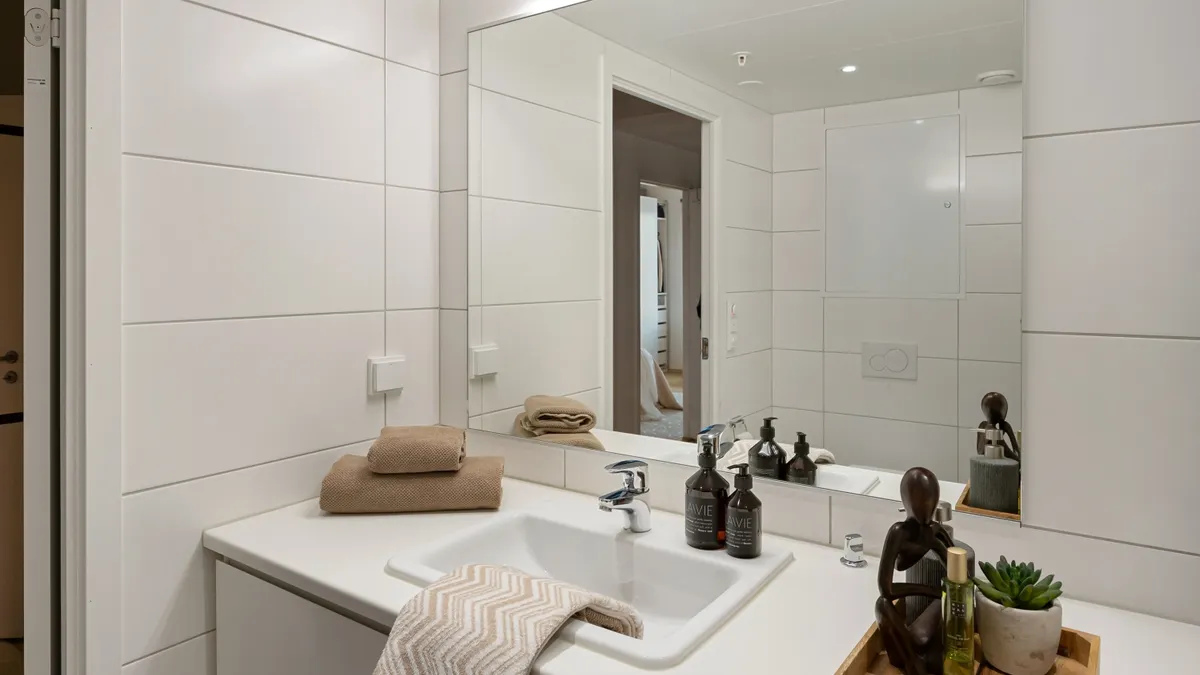
- Clear the counter down to the soap dispenser and one daily item, such as a hand lotion or a small tray, so the sink area reads open.
- Hang or replace the towel rack at a sensible reach height, around eye to shoulder level for adults, so towels look intentional instead of piled on the back of a door.
- Choose one mirror shape and let it define the wall above the vanity; a round mirror softens sharp tile lines, while a rectangular mirror feels cleaner and more structured.
- Add one bath mat in a solid color or subtle texture, and keep it centered at the sink or tub so the floor does not feel chopped up by multiple small rugs.
- Place storage basket(s) only where they hide real overflow, such as extra toilet paper or rolled washcloths, so the room looks orderly without being overstyled.
- Finish with one wall art piece or a pair of small prints spaced evenly apart; when art is hung with 2 to 4 inches between frames, it usually reads calm rather than cluttered.
The biggest mistake is buying decor in isolation. A single marble tray, a woven basket, and a brass mirror can all be beautiful, but if they each introduce a different style, the room looks pieced together. Match the finishes, or at least keep them in the same temperature range.
Another mistake is using too many tiny objects. Five small jars look busier than one basket and one dispenser. If the bathroom is small, every extra piece has a bigger visual cost, even when it is technically useful.
What wall decor makes a bathroom feel clean instead of busy?
Wall decor makes a bathroom feel clean when it is large enough to look deliberate, sealed enough to handle humidity, and spaced with clear margins. One 18-by-24-inch print often reads calmer than three small frames because it gives the eye one place to land.
For wall art, pick imagery that does not fight the room: botanicals, abstract line work, soft landscapes, or black-and-white photography usually work better than saturated, high-contrast graphics. The point is not to make the wall disappear; it is to keep the room from feeling noisy. In a bathroom, white space around art matters as much as the art itself.
A mirror is part of wall decor too. A mirror with a slim frame, or no visible frame at all, keeps the room bright and easy to read. If the vanity has a strong finish, such as dark wood or patterned tile, a simpler mirror shape usually balances it. If the room is plain, a mirror with a slightly wider frame can add enough definition without becoming the star.
Moisture-safe materials matter here. Framed paper art behind glass is safer than unprotected prints. Metal, sealed wood, and acrylic can handle the environment better than unfinished wood, heavy fabric, or anything with loose paper edges. Bathrooms with weak ventilation are harder on decor, so this is not the place for delicate surfaces. The CDC recommends reducing bathroom moisture to limit mold growth, and that same advice helps decor last longer in damp rooms. See the CDC mold and moisture guidance.
A common misstep is hanging art too high. If the center of the piece is near the upper third of the wall but disconnected from the vanity or towel rack, it can feel floaty. Place it where it visually relates to the sink, mirror, or tub so the wall looks composed rather than accidental.
How to style towels, mats, and the towel rack for a spa look
Towels, mats, and the towel rack create the spa feeling when they look coordinated, folded or hung with purpose, and free of fraying edges. A stack of crisp towels can do more for the room than a shelf full of decorative objects.
Start with a towel strategy. Keep two visible towel colors at most: one main neutral and one accent, or just one neutral if the room is already visually active. White is the classic spa choice because it reads clean, but soft gray, sand, and warm taupe can feel just as polished. If the towels are patterned, keep the pattern subtle and the rest of the room plain.
A towel rack should be treated like furniture, not an afterthought, but the safest approach is to install or reposition it with care and, if needed, consult a professional for placement and anchoring. The U.S. Access Board’s bathroom guidance also shows why reach and clearance matter in a real room, not just in theory. Bars work well for drying and a tidy look; hooks are useful, but they read more casual. If the goal is polished, use the bar for the “best” towel and hide the everyday backup elsewhere. Folded hand towels can sit on a basket edge or shelf, but do not stack them so high that they slump.
The bath mat should support the mood, not interrupt it. A thick, shaggy mat can feel cozy, but it often looks heavier than a spa style needs. A low-pile cotton mat or woven texture tends to feel cleaner and dries faster. Aim for one mat that is large enough to anchor the sink area without extending past the room’s natural walking path.
The trade-off is comfort versus crispness. Plush textiles feel indulgent, but they trap more moisture and visually bulk up the floor. Thin, fast-drying textiles look tidier, but they do not give the same cushioned feel underfoot. For a spa-like room, the cleaner visual usually wins.
How do I use storage baskets and the soap dispenser as decor?
Storage baskets and the soap dispenser become decor when they look consistent, hold only the items you actually need, and reduce the number of things sitting in the open. A nice basket that is stuffed full does not look spa-like; it looks under-managed.
Choose baskets that solve an actual overflow problem: extra toilet paper, rolled hand towels, hair tools, or backup toiletries. Woven baskets soften tile and porcelain, while metal or lacquered bins feel more structured. In a clean bathroom, one medium basket often looks better than several tiny ones because it gives the room a single storage note instead of many little interruptions.
The soap dispenser should be part of the same visual story. Refill bottles in amber glass, matte ceramic, brushed metal, or clear glass all work if they are consistent with the room’s finish. A mismatched dish soap bottle in bright plastic can undo the calm effect of a carefully styled sink in seconds. If the sink area is visible from the doorway, this single swap has outsized impact.
Keep one tray or sink mat only if it gathers the dispenser, a lotion bottle, and maybe a small dish for jewelry. Any more than that starts to read like a collection. The goal is to create a small, organized landing zone, not a countertop display.
A frequent mistake is hiding everything in baskets and then leaving the basket tops open to damp air and dust. If the basket holds towels or paper goods near a shower, use a lidded option or place it farther from splashing. Woven materials can be beautiful, but they still need dry placement to look fresh over time.
For more sink-side styling ideas, see the bathroom vanity ideas page and the small bathroom storage ideas page.
What bathroom plants actually work in a spa-like room?
Bathroom plants work best when they tolerate humidity, lower light, and the occasional temperature swing, because a spa-like room is not a greenhouse. A plant that declines in two weeks does not make the room calmer; it makes the room look neglected.
Good candidates are often plants that handle indirect light and moisture well, such as pothos, snake plant, ZZ plant, peace lily, and ferns if the room has enough light. That does not mean every bathroom can support them. A room with no window and no bright ambient light is usually a poor match for most living plants, no matter how polished the pot looks.
Use one plant in a simple pot rather than several small pots scattered around. A single plant on a vanity corner, shelf, or low stool can soften hard edges without becoming clutter. The pot matters as much as the plant: choose ceramic, stoneware, or another moisture-resistant finish in a color already used elsewhere in the room.
If the bathroom is small or the counters are already tight, hanging planters and high shelves are often a worse choice than they seem. They can crowd the upper visual field and make the room feel busier. A plant needs room to breathe visually, just like a mirror or a piece of art.
The honest drawback is maintenance. Plants are living decor, and they will wilt, lean, or drop leaves if the light is wrong or the air stays too wet. If the room is dim, a high-quality faux plant may be the cleaner choice. It will not purify the air, but it will keep the visual effect without adding another task.
The finishing touches that keep the room calm day after day
The finishing touches are what keep a bathroom looking spa-like on a Tuesday morning, not just on the day it was decorated. A room can have good pieces and still look cluttered if it lacks a simple reset habit.
Start with a 60-second visual reset: straighten the bath mat, wipe the sink edge, fold the hand towel, and remove anything that does not belong in the bathroom. Do that before adding new decor, because decoration cannot fix daily clutter. If the sink is crowded with skincare bottles, the room will never read as clean, no matter how nice the mirror is.
Lighting matters too. Soft, even light flatters tile, towels, and wall art better than a single harsh bulb. If the room uses a vanity fixture, choose a clean-lined one that does not cast deep shadows across the mirror. Warm light often feels more spa-like than cold light, but the bigger goal is evenness rather than a specific color temperature.
Scent is the final layer, and it should stay subtle. A reed diffuser, a clean candle placed safely away from towels, or a lightly scented soap can suggest a spa without overwhelming the room. The mistake is using too many scent sources at once, which can make a small bathroom feel stale instead of fresh.
The cleanest spa-like bathrooms are not decorated heavily. They are edited, practical, and repeated in a few controlled materials: mirror, wall art, towel rack, soap dispenser, bath mat, storage basket. That is enough.
Key Takeaways
- A spa-like bathroom comes from editing, not adding: fewer objects, calmer finishes, and more open surfaces.
- Moisture-safe materials matter as much as style, especially for towels, wall art, baskets, and mirrors.
- One strong mirror, one steady color story, and one or two textiles usually look cleaner than many small accents.
- Plants can soften the room, but only if the light and humidity suit them.
- The room stays polished when the everyday items—soap dispenser, towel rack, bath mat—look intentional, not temporary.
How do I decorate a bathroom without making it look crowded?
Keep the number of visible items low and give each one a job. A soap dispenser, one towel set, one bath mat, and one piece of wall art are usually enough for a calm look. If the counter starts to hold extras, move them into a basket or cabinet so the surfaces stay open.
What decor works in a small bathroom?
Choose decor that does more than one thing, such as a mirror that brightens the room, a storage basket that hides overflow, or wall art that adds interest without taking floor space. Flat, vertical pieces usually work better than bulky table decor. In tight rooms, the cleanest option is often the one with the fewest parts.
How do I make a bathroom feel spa-like?
Use a restrained palette, soft textiles, and moisture-safe materials. A simple mirror, folded towels, a low-profile bath mat, and one plant or art piece can create the mood quickly. The spa feel comes from visual quiet, so remove extra bottles, bright packaging, and mismatched accessories before adding anything new.
Drafted with AI; not yet reviewed by a person.