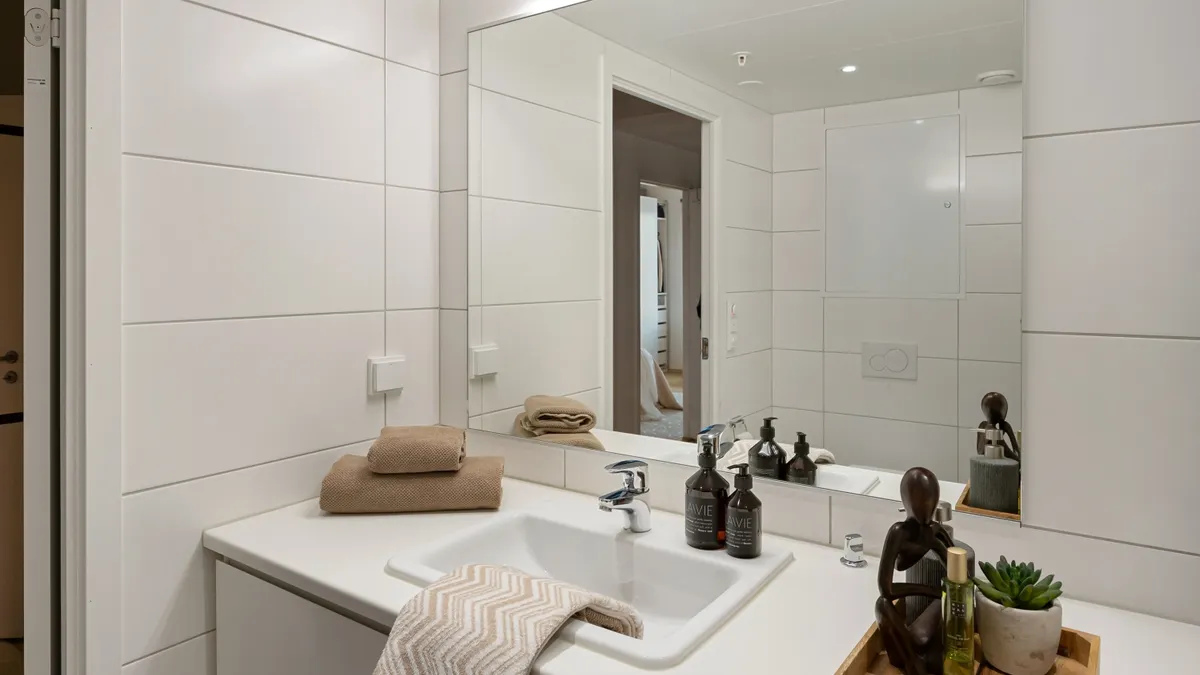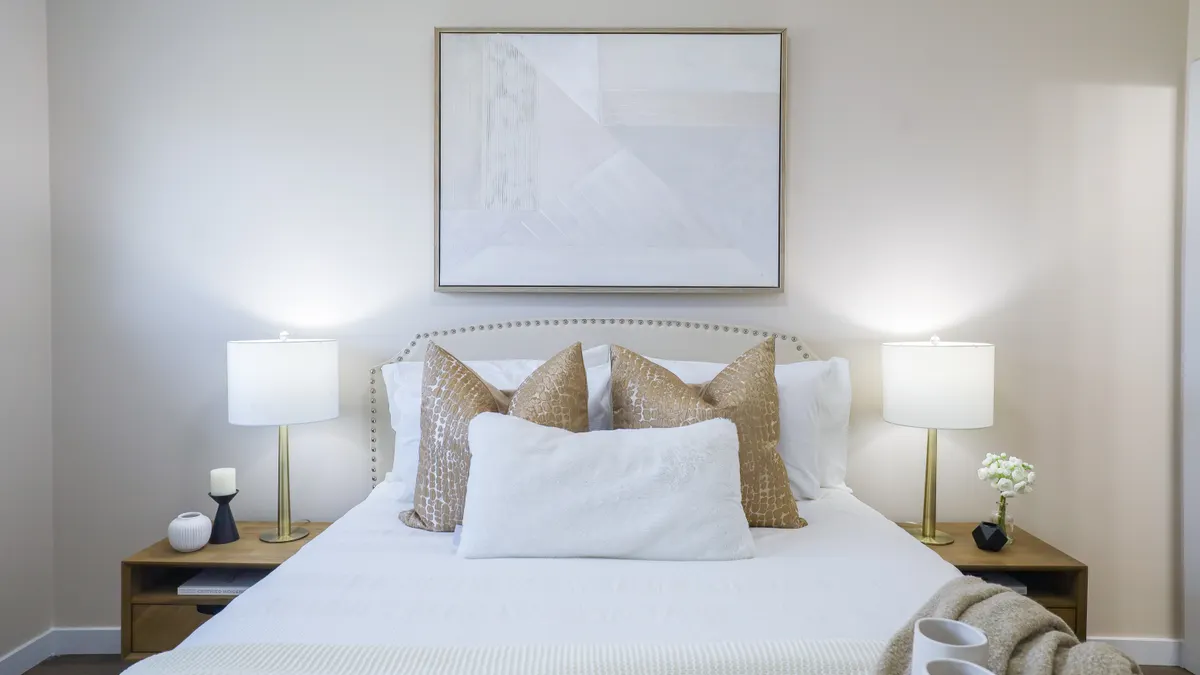
Last updated: October 21, 2026
Key Takeaways
- Good bedroom decorating solves circulation, storage, and sleep before styling.
- Place the bed where paths stay open and the view feels balanced.
- Treat the bed frame, headboard, and nightstands as one proportion system.
- Keep bedding layered and resettable in under 2 minutes.
A calm, functional bedroom starts with the bed, the light, and the storage plan. If those three parts are right, the room stops feeling cluttered and starts working like a place to sleep, dress, and unwind. In these bedroom decorating ideas, the goal is a room that supports daily use first.
Bedroom decorating ideas that make the room work first
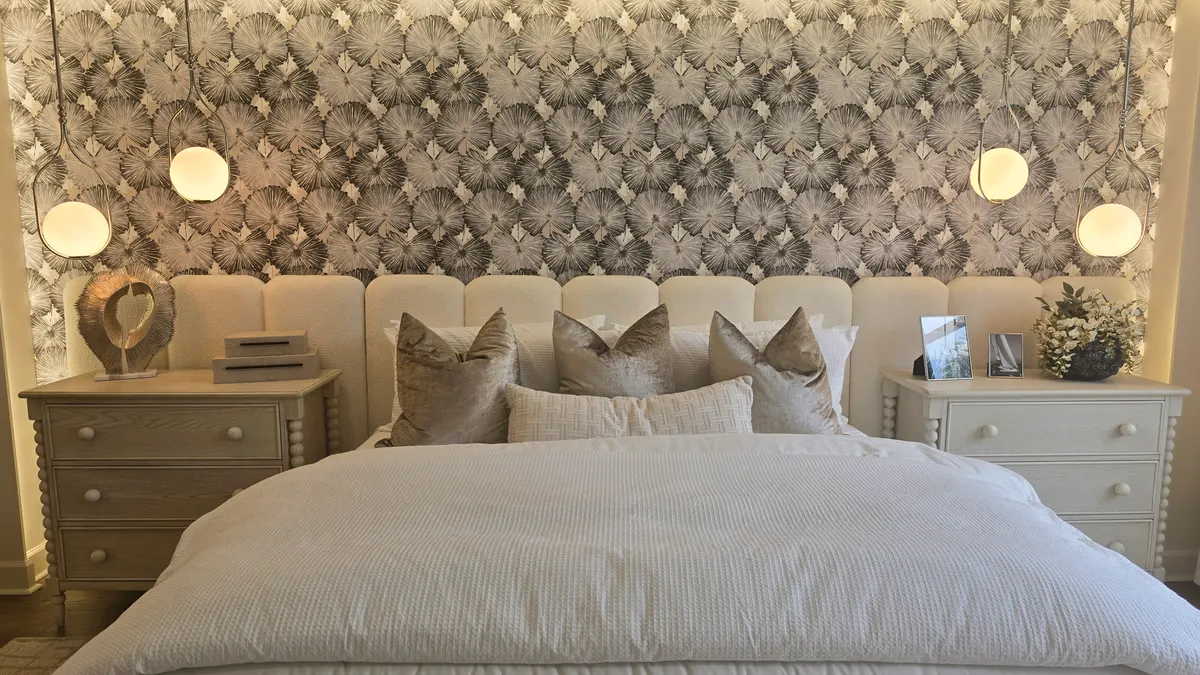
The best bedroom decorating ideas solve circulation, storage, and sleep before they decorate. A pretty room that blocks the closet door or throws light into your eyes at 11 p.m. is still a bad bedroom.
Start with the bed placement, because the bed sets every other decision. In most rooms, the bed should sit where you can reach both sides easily and open drawers without hitting a wall or a door swing. If the room has one strong window wall, place the bed so the headboard is on a solid wall and the foot of the bed does not line up directly with the doorway. That usually gives the room a calmer sightline and makes the bed feel anchored.
Next, decide what belongs beside the bed. A nightstand is not decoration first; it is storage for the things you need within arm’s reach: a bedside lamp, a book, a glass of water, a charger, maybe a small dish for jewelry. A good rule is a nightstand roughly level with the mattress top or within a few inches of it, so you do not have to reach up or drop your hand too low in the dark.
Then choose one larger storage piece. A dresser, even a narrow one, gives the room a home for folded clothes, extra bedding, or seasonal items that do not belong in open view. If the room already has a closet, the dresser should still earn its space by taking the overflow that would otherwise land on chair backs or the floor.
The rest of the decor should support that plan. Keep a chair only if it has a job. Keep art to the walls that do not compete with the bed. Keep surfaces partly open, not packed edge to edge. A bedroom feels calmer when every object has a reason to be there.
For more room-planning basics, the home organization guide can help you decide what belongs in the bedroom and what does not.
Where should the bed go in a bedroom?
The bed should go where it creates a clear path, a balanced view, and easy access to the rest of the room. That usually means a position with the headboard on the most solid wall and enough clearance on each side for walking and opening furniture.
A useful way to place it is to stand in the doorway and look at the room as a daily route, not a photo. The bed should not block the natural path to the closet, windows, or bathroom door. If the room is rectangular, the longest wall often works best for the headboard. If the room is square, the wall opposite the door can create the most settled feeling.
Leave enough room to move. A bedside lane of about 24 inches is a practical target for a comfortable pass on each side, though rooms vary and a smaller side may be unavoidable. If a door swings inward, make sure the bed frame and any nightstand stay clear of that swing. A bed that forces a shoulder-turn every morning makes the whole room feel tighter than it is.
Window placement matters too. A bed directly under a window can work, but it changes the look and the light control. It asks more from the curtains and from the headboard height. If the window is the room’s strongest feature, the bed may be better on another wall so the window can stay visually open.
The trade-off is that the most balanced bed position is not always the most dramatic one. A centered bed can look polished, but only if it still leaves room for real life. If the “perfect” arrangement makes drawers unusable, it is not the right arrangement.
For a layout example, see the small bedroom layout guide.
How to choose a bed frame, headboard, and nightstands
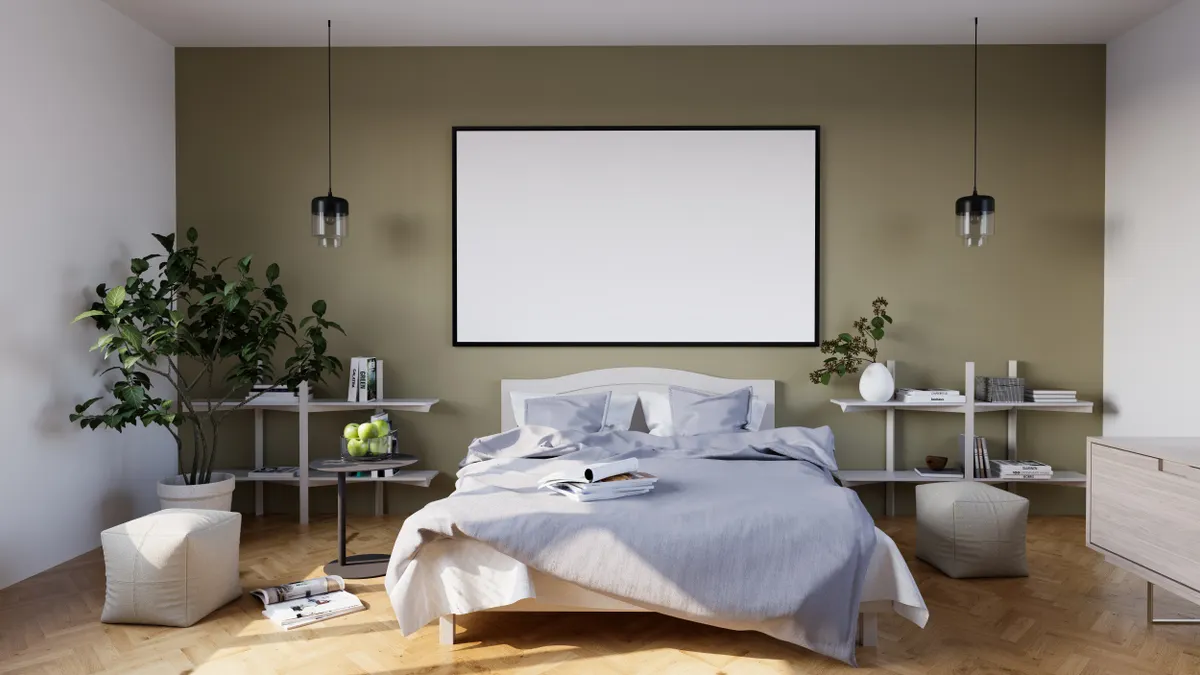
Choose a bed frame, headboard, and nightstands as one set of proportions, not three separate purchases. The bed is the largest object in the room, so its height, bulk, and finish should set the tone for everything nearby.
A low platform bed reads quieter and more modern. A taller frame can give the room more presence and make the mattress easier to get in and out of. Pick based on comfort and scale. In a room with low ceilings, a very tall bed plus a thick headboard can feel heavy. In a room with high ceilings, an undersized frame can disappear and make the room feel unfinished.
The headboard should do more than look nice. It protects the wall, gives the bed a visual anchor, and makes sitting up with a pillow stack more comfortable. Upholstered headboards soften the room and reduce echo. Wood or cane headboards feel cleaner and easier to keep dust-free. If you like reading in bed, a padded headboard or an added pillow back matters more than a decorative shape.
Nightstands should match the way the room is used. A drawer is useful if the bedside collects glasses, chargers, lip balm, or medication. Open shelves work if you keep the surface minimal. If one partner needs more storage than the other, do not force identical nightstands just for symmetry; matching height matters more than matching style.
Keep the scale honest. A tiny nightstand beside a large bed looks accidental. An oversized nightstand can crowd the room and make the bed feel pinned in. The same goes for finishes: if the bed frame is visually heavy, choose lighter nightstands and simpler lamp bases; if the bed is light and airy, a substantial nightstand can help ground it.
This is where many generic bedroom decorating ideas go wrong: they treat the bed area as a styling moment instead of a working zone. The bed zone is where comfort either happens or fails. If you are unsure about proportions, consult a designer or other qualified professional and compare your choices with guidance from the National Sleep Foundation and the ASID.
What kind of bedding makes a bedroom feel calmer?
Calmer bedding is layered, not overstuffed, and it should be easy to reset in under 2 minutes. The goal is a bed that looks finished when made and still feels easy to use every night.
Start with the mattress protection and fitted sheet, then add a top sheet or a lightweight cover depending on how you sleep. A duvet insert in the wrong weight can make the bed too hot, too stiff, or too lumpy. If you sleep warm, a lighter blanket and a duvet cover are often easier to manage than a heavy comforter. If you sleep cold, layer a quilt under the duvet or keep an extra throw at the foot of the bed.
Use texture to add depth without adding clutter. Cotton percale feels crisp and cooler. Sateen feels smoother and a little richer. Linen looks relaxed and hides wrinkles well, though it can read less polished. One textured throw and two or four sleeping pillows are usually enough. More than that starts to eat into the “easy to make” part of the room.
Keep the color palette restrained if the aim is calm. That does not mean beige everywhere. It means limiting the number of competing patterns and loud contrasts in the bed itself. One patterned pillow or one striped throw is enough if the rest is quiet.
A common mistake is buying bedding for the showroom look rather than for the room’s use. A thick pile of pillows looks styled for five seconds and then becomes a nuisance every night. If you do not want to move six pillows before sleep, do not buy six pillows.
One practical standard: the bed should be simple enough that making it does not take more than a few minutes. If the layers take longer than that, the room becomes less functional, even if it looks impressive in photos. The Sleep Foundation notes that sleep environments work best when they are cool, dark, and quiet, which makes bedding choices part of the room’s function as well as its style.
How do I use curtains and bedside lamps to control the mood?
You control the mood with curtains that manage light and bedside lamps that give the room warm, usable light. Together, they decide whether the bedroom feels restful or bright and exposed.
Curtains should do two jobs: soften the window and help block light when needed. For privacy and sleep, choose a curtain length that reaches close to the floor and hangs wide enough to cover the glass without pulling tight across it. Blackout lining helps if streetlight, sunrise, or a neighbor’s porch light is a problem. Sheer panels alone look light, but they do little for sleep.
Mount the curtain rod higher than the window frame when possible. That creates a longer visual line and keeps the window from looking chopped up. It also lets the room feel more finished, especially if the window sits low on the wall. If the ceiling is low, that extra vertical line matters.
For light at the bedside, a bedside lamp is usually better than overhead glare. A lamp with a shade spreads light more gently for reading and getting dressed at night. A wall sconce can save surface space, but it asks for installation and forethought. Table lamps are easier to change and move; they also make the room feel more lived in.
Aim for light you can use without squinting. The lamp should sit low enough to read from comfortably and high enough that the bulb is not directly in your eye. If one side of the bed is used more heavily, that lamp can be slightly larger or brighter than the other. Symmetry is optional; usable light is not.
The drawback to dramatic window treatments is that they can be harder to maintain. If you are considering heavy fabrics, consult a window-treatment specialist or cleaning professional, and compare the care needs with the advice from the Good Housekeeping Institute. If you want the look without the upkeep, keep the curtain fabric simpler and let the headboard, bedding, and lamp do more of the work.
Storage in bedrooms without making them look crowded
Storage in bedrooms should disappear into furniture, not spread across the floor and chair backs. The room stays calm when storage is built into a few strong pieces instead of scattered across many small ones.
Start with the dresser. A dresser is a strong choice for folded clothes, sleepwear, and items you reach often but do not want on display. Put the most-used drawers between waist and shoulder height if possible, because they are easier to open and reset daily. If the dresser top is a catchall, reduce what lives there to one lamp, one tray, or one framed object.
Use under-bed space carefully. It is useful for out-of-season bedding, shoes, or spare linens, but it can also become the place where clutter hides. Use low bins or a dedicated bed frame with storage if you need the space; otherwise, keep the area clear so the room feels lighter.
Nightstands should also carry their share of storage. One drawer can eliminate a lot of visible clutter. If there is no drawer, use a small tray or dish to corral essentials. A clear surface is not about minimalism for its own sake; it makes the room easier to clean and less visually noisy.
If the closet is part of the bedroom plan, treat it as part of the decor system. A closet that works well reduces the need for extra furniture. Hooks on the back of a door, slim hangers, and a basket for laundry can save a room from needing another bulky piece.
Do not add storage just because a wall looks empty. An extra cabinet or bench can make a bedroom feel more cramped than it is, especially if it narrows the walking path. Storage should answer a real problem, not fill a blank spot.
The honest limitation: this approach is not for someone who wants the bedroom to act like a dressing room, office, and media room all at once. Once too many functions move in, calm gets harder to keep.
For more examples, the closet organization guide shows how to keep storage from spilling into the room.
A simple bedroom decorating sequence that avoids clutter
Use one order of operations and the room comes together faster. This sequence keeps you from buying decorative pieces before the functional layout is settled.
- Place the bed first and confirm the walking path, door swing, and window clearance. The result should be a bed position that feels settled and does not block the room’s main route.
- Choose the bed frame and headboard next, then match the scale of the nightstands. The result should be one unified bed zone rather than a collection of separate pieces.
- Add the bedside lamp, then check whether the light reaches the book, alarm, and charger without glare. The result should be a lamp you can use nightly, not just one that photographs well.
- Bring in the dresser or other main storage, and clear at least one surface completely. The result should be a room that has a home for clothes and accessories instead of visible piles.
- Hang curtains and finalize bedding layers last. The result should be a room that feels finished without needing extra decor to cover problems in the layout.
If the room still feels off after those five steps, the problem is usually scale, not style. Check whether the furniture is too large for the wall lengths, whether the lighting is too cold, or whether storage is too fragmented. A throw pillow will not fix a bad layout.
For broader room planning, the guide to room-by-room decorating ideas can help you think through each space as a separate job instead of trying to make one room do everything.
Common bedroom decorating mistakes that make calm harder
The biggest mistakes are oversized furniture, weak lighting, and decorative clutter that steals function. Each one costs the room some combination of space, sleep quality, or daily ease.
Oversized furniture makes the room feel blocked. A deep upholstered bed, a bulky dresser, and wide nightstands can all work in one bedroom, but not if the room is modest and the walking lanes disappear. The fix is not to remove style; it is to reduce depth, choose cleaner lines, or replace one large piece with a better-scaled one.
Poor lighting is another common miss. One ceiling fixture can leave the room flat and harsh at night. The better approach is layered light: overhead for cleaning, bedside for reading, and maybe one softer ambient source if the room needs it. The bedside lamp is usually the most important piece because it affects how the room feels at the hour you actually use it.
Too many decorative objects create visual noise. This is especially true on the dresser, nightstands, and bed. A pile of books, perfumes, candles, framed photos, and trays may look personal, but it can also make the room feel busy. Keep the pieces you use most and store the rest.
Another mistake is using curtains that are too short or too narrow. They make the window look undersized and can leave light gaps. Measure before buying, and allow enough width so the panels look full when closed.
Finally, do not let style outrun habit. A bedroom that looks perfect but requires a 10-step reset every night will not stay calm for long. The best bedroom decorating ideas are the ones you can live with on an ordinary Tuesday.
How do I make my bedroom feel cozy?
Make the room feel cozy by softening the bed, controlling the light, and reducing hard visual edges. Start with layered bedding, a bedside lamp with warm light, and curtains that help the room feel enclosed at night.
Drafted with AI; not yet reviewed by a person.