Last updated: October 27, 2026
Key Takeaways
- The easiest style upgrade is editing visible pieces: one pendant light, one rug, one open shelf, and a few useful countertop objects.
- To decorate a kitchen without clutter, give every item a job, a size limit, and a visual lane.
- A kitchen counter looks best with useful objects that also read as design, not with tiny accessories that force the eye to work too hard.
- Open shelving and wall decor add style fastest when they show fewer things, not more.
A kitchen can look more finished without changing cabinets, counters, or layout. Quick answer: the fastest wins usually come from what sits on the surfaces, what hangs on the walls, and how the room is lit.
Start with the pieces that change the whole kitchen
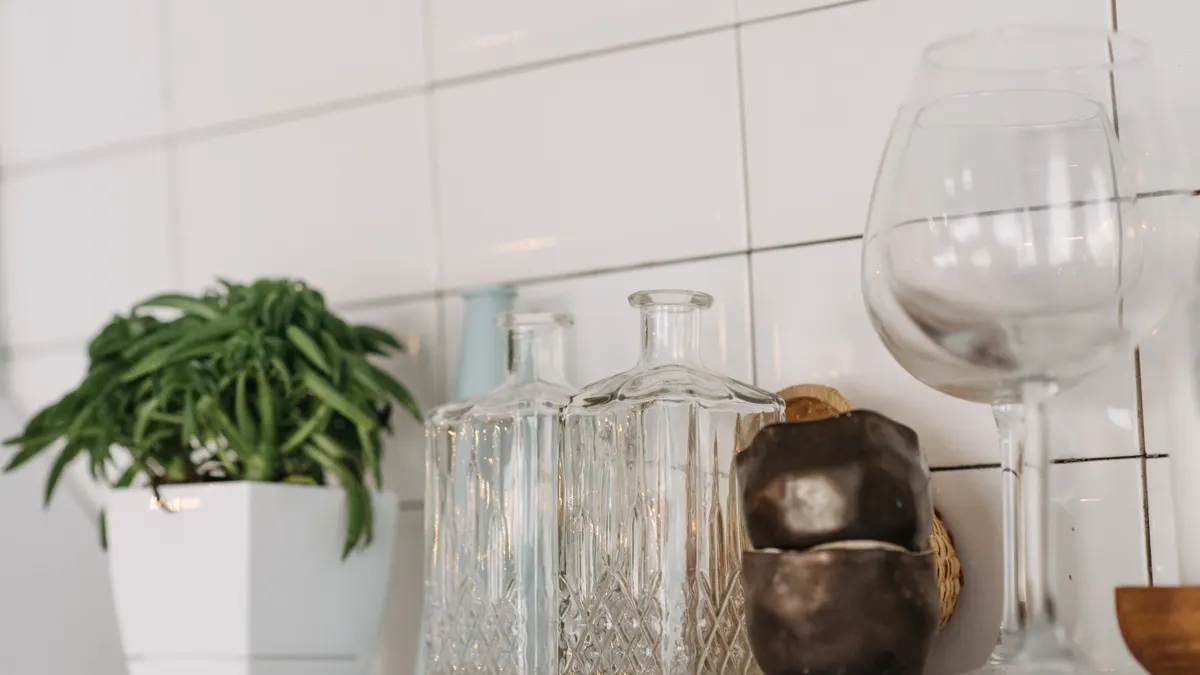
The easiest style upgrade is to edit what is already visible: one pendant light, one rug, one open shelf, and a few useful countertop objects. That mix changes the room’s tone without touching plumbing, tile, or millwork.
The goal is not to fill every blank spot. It is to make the kitchen look intentional in the same way a well-set table does: fewer pieces, better placed. A bowl of fruit on the counter says “lived-in.” A dish rack that matches the room instead of fighting it says “considered.” A bar stool with the right scale can make an island or breakfast counter feel anchored instead of accidental.
Here is the cleanest way to start:
- Clear every visible surface, then put back only the items used daily, such as a coffee maker, soap dispenser, dish rack, or fruit bowl. The counter reads calmer when there are 3 to 5 objects instead of a crowd.
- Choose one finish to repeat, such as matte black, brushed brass, wood, or stainless steel. Repeating a finish on a pendant light, stool legs, and a fruit bowl base makes the room feel coordinated fast.
- Add one soft layer, usually a kitchen rug or runner about 2 to 3 feet wide, so the floor stops feeling like bare utility space.
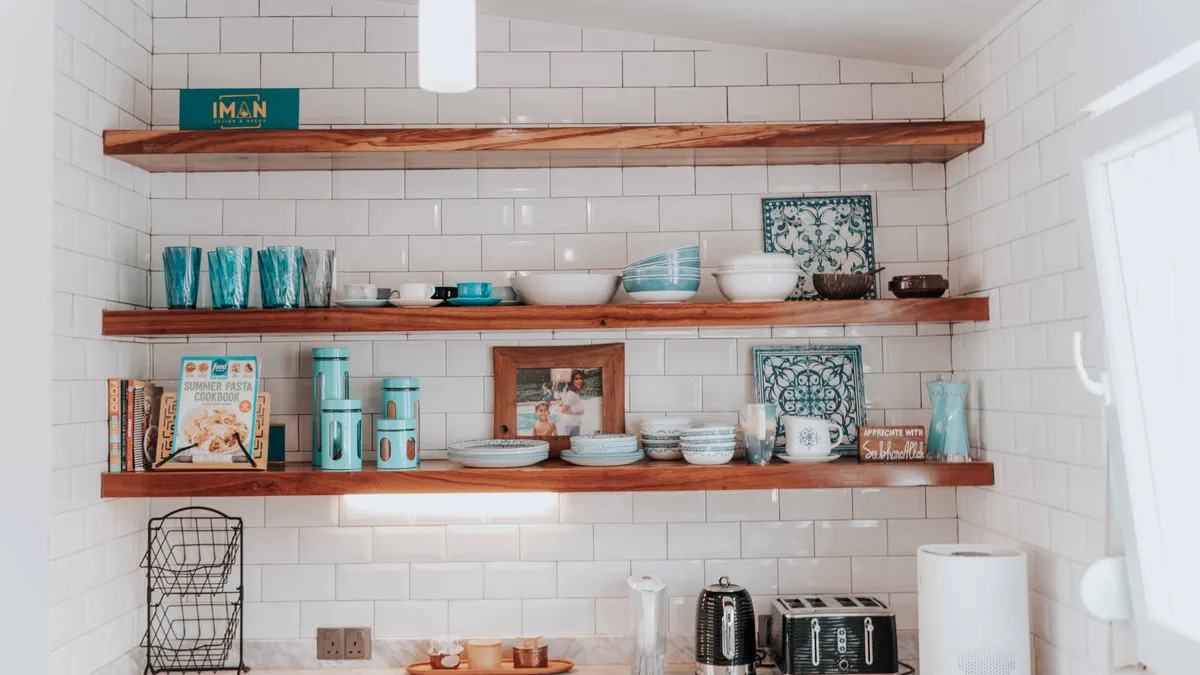
- Use one open shelf or wall zone for display, not the whole room. A single shelf with stacked dishes, a mug, or a cutting board has more impact than several crowded shelves.
- Swap in one larger decorative object, like a bowl, tray, or framed print, rather than many small ones. One object with presence beats five objects competing for attention.
This approach works best in kitchens that already function well but look unfinished. It is not the right move if the room is failing at storage, lighting, or safety. A decorative fix cannot hide bad workflow.
For room-by-room decorating context beyond the kitchen, the hub on room-by-room decorating ideas can help connect the style across the home.
How do I decorate a kitchen without making it feel cluttered?
You decorate a kitchen without clutter by giving every item a job, a size limit, and a visual lane. A counter object should either be used every day or be chosen purely for form, not both by accident.
The biggest mistake is treating the kitchen like a living room. In a kitchen, most surfaces need to stay clear for prep, cleanup, and heat. That means the decor has to earn its keep, and if you are unsure what should stay, consult a professional organizer or kitchen designer. A fruit bowl works because it is useful and sculptural. A dish rack works if it looks neat and lives near the sink. A decorative tray helps because it corrals hand soap, oil, or salt into one footprint. A bar stool helps because it fills a real function and can still bring in texture or color.
Use the “one zone, one statement” rule. A counter near the sink can hold the dish rack and soap. A far counter can hold a bowl or a lamp if the kitchen is large enough. An open shelf can carry stacked bowls, but it should not also hold 12 little figurines, three signs, and a candle that never gets lit. A room starts to feel fussy long before it becomes truly full.
The scale matters as much as the count. In a long kitchen, one 18-inch bowl can look right where three small pieces look scattered. On a narrow counter, even a pretty object can become a blocker if it steals prep space. Leave at least one uninterrupted stretch of counter for actual work; that untouched span is what keeps the room from reading as staged.
If the kitchen is already busy, choose decor with a lower visual profile: wood, ceramic, linen, matte metal. Glossy plastic and highly patterned pieces are harder to calm down. One textured kitchen rug on the floor can add warmth without taking up more counter space.
Who this is not for: anyone trying to disguise a kitchen that needs more storage or better layout. No arrangement of decor will solve that problem.
What can I put on kitchen counters for decor?
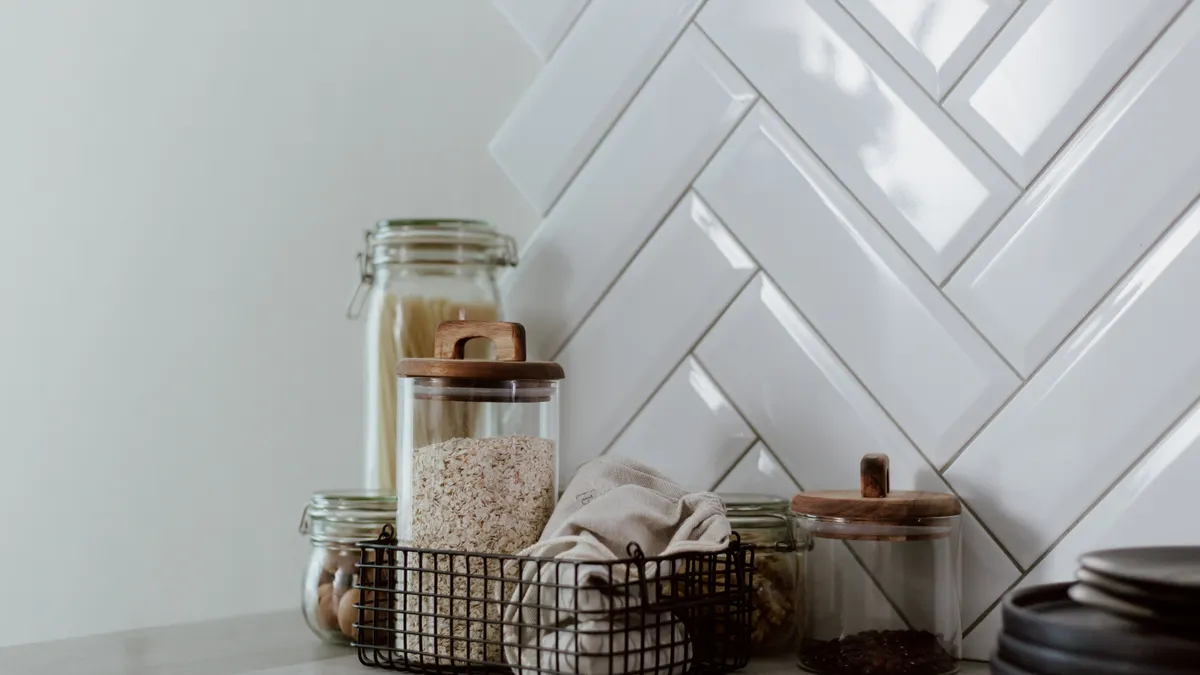
A kitchen counter looks best with useful objects that also read as design, not with tiny accessories that force the eye to work too hard. The safest-looking pieces in many kitchens are a fruit bowl, a dish rack, a tray, a soap dispenser, a cutting board, and one sturdy canister or vase.
The counter is where decoration has to behave. It has to survive splashes, heat, and daily handling. That rules out most delicate decor. It also means the best pieces usually have a blunt shape and a practical reason to exist. A wood cutting board leaned against the backsplash softens a hard surface and stays useful. A ceramic fruit bowl brings color and volume. A narrow tray can hold oil, salt, and soap so the cluster looks intentional instead of abandoned. If you have to wipe around an object every day, make sure it earns the effort.
Use proportions that match the counter depth. On a standard counter, a piece that is too tall will block sightlines and make cleanup awkward. A low bowl or a grouped set of items under about 12 inches tall usually feels more relaxed than a single large vase. If you want height, use one item near the backsplash, not in the work zone.
A good countertop arrangement often follows this pattern:
- one anchor object, such as a bowl or board
- one working object, such as soap or a dish rack
- one soft element, such as a small plant or linen towel
- one empty stretch of counter for food prep
That balance keeps the kitchen practical while still styled. It also works in both modern and traditional kitchens because it relies on shape and spacing, not on theme.
Avoid collecting kitchen decor in sets just because they match. Matching is easy; restraint is harder. A matching trio of jars can look like storage, not style, if the lids and labels are loud. One handmade bowl can do more for the room than a shelf of coordinated containers.
Kitchen decorating ideas for open shelving and walls
Open shelving and wall decor add style fastest when they show fewer things, not more. The shelf or wall should give the kitchen a focal point, not another surface to maintain.
Open shelves can be beautiful because they let dishes, glassware, and boards become part of the room’s look. They can also become visual static in about ten minutes if every available inch gets used. The best shelves often hold repeating shapes: stacks of plates, one row of bowls, two or three mugs, a cutting board, and maybe a small framed print propped at the back. That mix gives structure. It also leaves air around the items, which is what makes them feel deliberate.
Use wall decor the same way. One framed print, one clock, one metal rail, or one set of hooks is enough for many kitchens. A wall does not need to carry a full gallery unless the room is large and the rest of the surfaces are nearly bare. In a working kitchen, too many framed pieces can feel fragile and visually noisy. If the wall gets splash or steam, choose materials that can handle cleaning, or keep the art well away from the sink and stove.
A useful standard is to hang decor where the eye naturally lands from the doorway or eating area. That might be above a small shelf, over a pass-through, or beside a pantry door. Hanging too high makes the room feel disconnected; hanging too low makes the space feel crowded. If you are unsure, hold the piece in place for a day with painter’s tape before committing.
Open shelving is not the right choice if you cannot keep dust off the items or if your kitchen already has too many visible surfaces. It works best when the shelf content can be wiped quickly and kept edited. For many kitchens, two shelves are plenty; more than that often starts to look like display storage rather than decoration.
How to use a kitchen rug, pendant light, and bar stool for style
A kitchen rug, pendant light, and bar stool can change the room’s mood more than a dozen small accessories because each one changes a different layer: floor, ceiling, and seating.
A kitchen rug adds softness and color underfoot. It is most useful where people stand for long stretches, such as at the sink or prep area. A flat-weave rug or runner is usually easier to live with than a thick pile, because it tends to sit flatter and look less bulky. It should feel like part of the kitchen, not like a borrowed living-room piece. If the pattern is busy, keep the rest of the room quieter.
A pendant light matters because it defines a zone. Over an island or peninsula, one strong pendant or a pair of smaller pendants can make the whole kitchen look planned. The fixture does not need to be fancy; it needs to fit the scale of the surface below it. A tiny pendant over a long island looks timid. An oversized one in a compact kitchen can feel heavy. The right light gives shape to the room even before you decorate anything else.
Bar stools do the same job at seating height. A stool with a wood seat, woven back, or slim metal frame can make a breakfast bar feel like a destination instead of leftover counter space. The wrong stool is one that is too bulky, too tall, or too stylistically isolated from the room. If the stool legs, light fixture, and cabinet hardware all speak the same visual language, the kitchen settles down fast.
These pieces are not interchangeable. A rug will not fix a dull ceiling. A pendant light will not soften a hard floor. A bar stool will not organize the counter. Each one earns its place by changing a different part of the room.
What mistakes make a kitchen look styled instead of lived-in?
The mistakes that make a kitchen look staged are too many small items, too many finishes, and decor that blocks the work zones. Each one costs the room either calm, function, or both.
Too many small objects can make a kitchen feel dusty and busy. A row of little signs, mini plants, jars, and candles creates visual noise. The fix is simple: remove half of them and keep the largest, clearest pieces. One fruit bowl has more presence than four tiny ornaments.
Mixing every metal finish is another common error. If the room has chrome hardware, brass lamps, and black stool legs, the eye has no resting place. That does not mean every finish must match exactly, but one dominant metal and one supporting finish usually works better than a free-for-all. Repetition makes the kitchen feel edited.
Ignoring cleanup is the third problem. A decorative tray that traps crumbs, a rug that slides, or a shelf that collects dust quickly stops feeling like style and starts feeling like work. The better choice is usually the one that can be wiped, shaken out, or moved in under a minute. In a kitchen, maintenance is part of the design.
The last mistake is placing decor where people need to prep, open doors, or set down hot pans. A pretty bowl on the busiest counter may look good for a week and annoying for years. If a decorative item forces constant adjustment, it belongs somewhere else.
The honest trade-off is this: the more decorative a kitchen becomes, the less flexible it often is for cooking. That is why the strongest kitchen decorating ideas without renovating use just enough pieces to shape the room and no more.
A simple order for styling your kitchen in one afternoon
A kitchen can be styled in one afternoon if the work happens in the right order: clear, anchor, layer, and then edit.
Start by removing anything that does not belong on a counter or shelf every day. That makes the room look bigger before a single new object enters it. Then bring in the largest pieces first: the pendant light if it is being replaced, the rug if one is needed, the bar stool if seating is part of the room’s visual balance. After that, style the surfaces with smaller items.
Use this order:
- Clear counters and shelves completely, which reveals the true amount of empty space.
- Place the functional pieces back first: dish rack, soap, coffee gear, or toaster.
- Add one decorative anchor per zone, such as a fruit bowl on one counter and a framed print on one wall.
- Repeat one material or finish in at least two places so the room feels connected.
- Step back and remove one thing from each surface if the room starts to feel crowded.
That final edit matters more than the shopping. Kitchens often look better after one object is removed than after a new one is added. If the room still feels unfinished, add one more layer only where the eye lands most often, not everywhere at once.
The best kitchen decorating ideas do not hide the kitchen’s purpose. They sharpen it. A clear counter, a useful dish rack, a steady pendant light, a good rug, and one or two well-chosen wall pieces can make the room feel designed without making it harder to cook in.
How do I decorate a kitchen on a budget?
Focus on surfaces you already have and buy only one or two visible pieces. A fruit bowl, a kitchen rug, or a single pendant light can change the room more than a bag of small decor. Edit what is already on the counter first, because the cheapest upgrade is usually removal, not replacement.
What can I put on kitchen counters for decor?
Put useful objects that also look good, such as a dish rack, fruit bowl, cutting board, tray, or soap dispenser. A counter works best when it still has clear prep space, so choose pieces that sit low, are easy to wipe, and do not turn into clutter after a week.
How do I decorate kitchen open shelves?
Keep open shelves edited and repetitive in shape. Stack plates, line up bowls, lean a cutting board, and leave space around each group so the shelf can breathe. If the shelf starts holding too many colors, labels, or small objects, it stops reading as decor and starts reading as storage.
Drafted with AI; not yet reviewed by a person.