Last updated: October 27, 2026
Key Takeaways
- Plan the desk first; it shapes how the room works and feels.
- Build three zones for work, support, and visual rest.
- Good task lighting matters most after dark.
- Closed storage helps keep clutter from distracting you.
A well-decorated home office is one that helps you start work faster, stay comfortable longer, and close the laptop without clutter in your head or on the desk. Home Office Decorating Ideas for a Productive Workspace work best when you treat the room as a workflow tool, not a backdrop.
Home office decorating ideas for a productive workspace that start with the desk
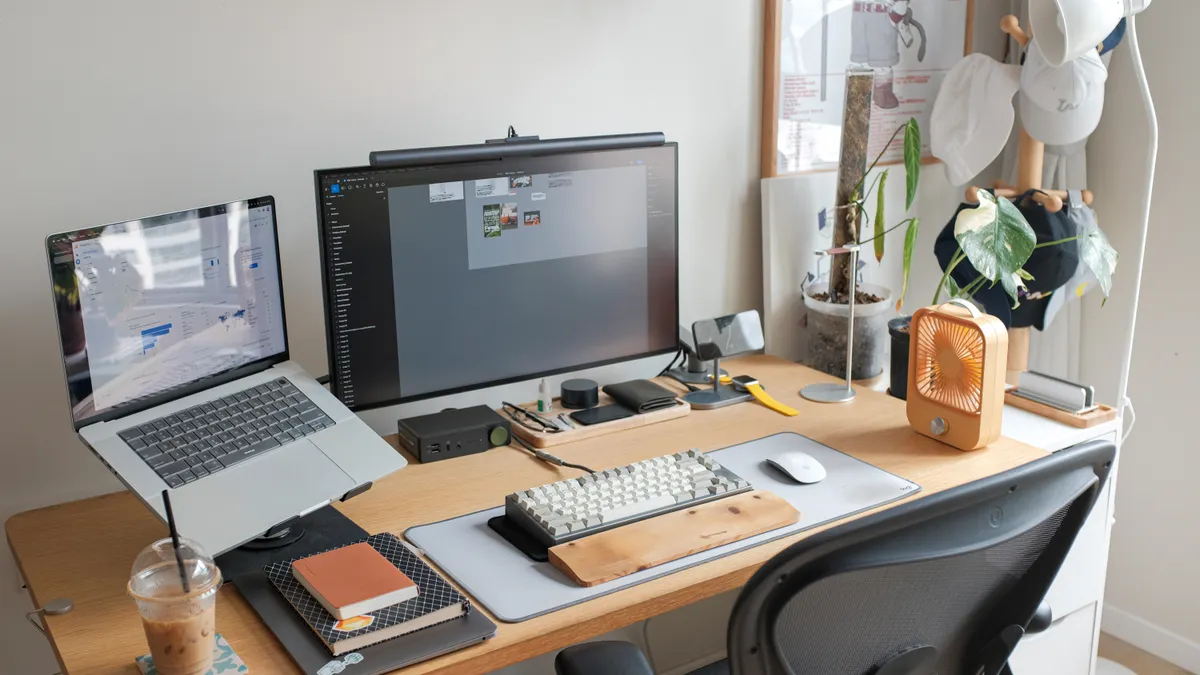
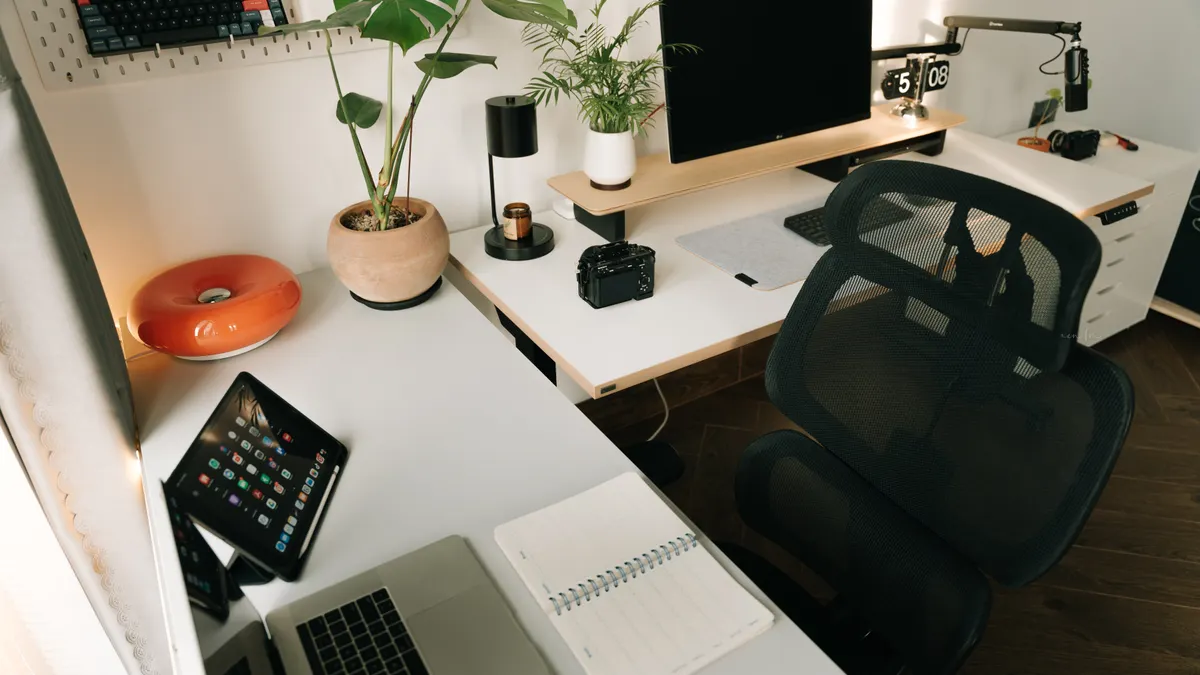
The desk should be the first thing you plan, because it controls how the whole room feels and functions. A standard desk depth of about 24 to 30 inches gives enough room for a laptop, a monitor arm, and writing space without pushing you into a crowded posture. If the desk is too small, everything else becomes visual noise; if it is too large, the room can feel blocked and hard to use.
Start by deciding what belongs on the surface every day. Keep the monitor or laptop centered, the chair aligned with the working edge, and a task light on the non-writing side of your dominant hand. A desk lamp with an adjustable arm lets you aim light where you need it instead of flooding the whole room. That matters because the desk is where focus either begins or gets interrupted.
The desk finish also shapes the mood. Wood tones make a room feel warmer; painted finishes can look cleaner and more formal. Matte surfaces hide fingerprints better than glossy ones, which is useful if the desk also serves as a meeting background. If the room has a window behind you, a darker desk can help anchor the view instead of reflecting light back into your eyes.
A home office with a clear desk setup usually looks more polished with fewer objects, not more decor. One framed print, one pen cup, and one tray for daily papers often beat a crowded row of accessories. That is the point where decorating stops being decoration and starts becoming distraction.
How do I decorate a home office to stay productive?
I decorate a home office for productivity by building three zones: work, support, and visual rest. That means the desk carries the active task, the shelves or cabinet hold the overflow, and the wall behind the chair gives the eye something calm to land on.
Use this sequence to shape the room:
- Place the desk where it gets the best available natural light without screen glare. Morning light from a side window is often easier to work with than a window directly behind the monitor.
- Choose an office chair that fits the desk height and lets your feet rest flat. If the chair is too low or too high, the room may look stylish but the body will pay for it.
- Add a desk lamp with a warm-neutral bulb around 3000K to 4000K for task work. That range usually reads as clear without feeling harsh at night.
- Put shelving within arm’s reach for books, files, and supplies you use weekly. Visible storage cuts the time spent searching and keeps the desktop clear.
- Hang a pinboard or pinboard-style panel beside the desk for notes, deadlines, and reference sheets. A single board keeps active reminders out of the main visual field.
- Finish with one or two background elements, such as a framed print, a plant, or a closed cabinet, so the room looks intentional on camera without turning into a gallery wall.
The important move is restraint. A productive room should feel composed, not staged. If every surface carries decor, the room starts asking for attention instead of giving it back. That is especially true for people who do long reading, editing, or planning sessions.
This approach is not right for someone who wants the office to double as a display room. If the goal is maximal style first, function second, the furniture plan will look different. For a working room, though, calm beats spectacle.
Lighting that keeps the room usable after dark
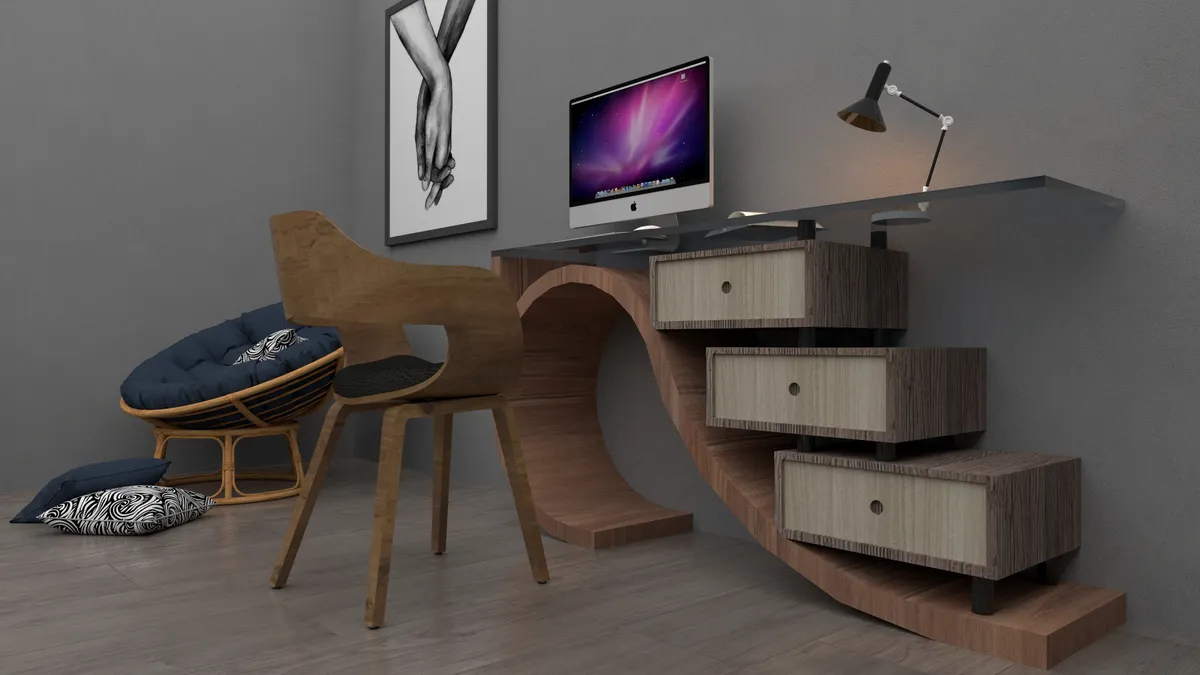
Task lighting makes the biggest difference after sunset, because a beautiful office without good light quickly becomes tiring. A desk lamp, overhead fixture, and any daylight from the room should work together instead of competing.
The safest place to start is with layers, though not every room needs the same mix. Ceiling light handles general visibility, the desk lamp handles detail work, and any accent light gives the room shape when the main lights are off. A lamp with a pivoting head is more useful than a fixed decorative lamp because it can move with the task. If the lamp base eats too much desk space, the room looks cluttered before the workday even begins.
Bulb choice changes how the room feels. A 3000K bulb usually gives a warmer, calmer result, while 4000K feels crisper for paperwork and screen-heavy work. Neither is automatically right in every room. A north-facing office may already feel cool, so a warmer bulb can soften it. A south-facing room may benefit from something slightly cooler to avoid a yellow cast.
Watch for reflection. Glass picture frames, glossy desk surfaces, and shiny cabinet fronts can throw light back into the room. If a lamp creates glare on the monitor, move it to the opposite side or raise it a few inches. The goal is not brighter light everywhere; the goal is enough light where the hands and eyes need it.
Accent lighting can help a home office feel finished, but it should stay subtle. A small shelf light, picture light, or floor lamp can add depth without turning the room into a lounge. Too many decorative lights make the office feel social when it should feel focused.
For room-lighting principles, the U.S. Department of Energy’s lighting guidance is a useful reference point, and the Illuminating Engineering Society publishes standards that lighting professionals use when they plan interiors.
Storage that hides clutter without making the room dull
Storage cabinet choices matter because clutter is not only a mess problem; it is a focus problem. A closed cabinet, a few shelves, and a pinboard will usually do more for the room than decorative containers scattered across the desk.
The best storage plan separates what you touch daily from what you only need occasionally. Keep active items at desk height or on the nearest shelf. Put archive files, extra paper, and spare supplies behind closed doors. A cabinet with doors is often the easiest way to make a home office look calm by Friday afternoon, when the paper pile has grown and the mind is already tired.
Open shelving works well for books, binders, and a small number of objects with a visual rhythm. If you are unsure how much to display, consult a professional organizer or interior designer, because the mistake is treating every shelf like a display ledge. Too many mixed-height objects create visual static, especially in a room where your eyes are already working. A short row of matching boxes, a few upright books, and one decorative item per shelf is usually enough. Better Homes & Gardens also recommends limiting shelf decor so the room stays orderly, not crowded.
If the room must also function as a guest room or shared space, storage has to do more hiding than showing. In that case, a low cabinet with doors often looks cleaner than open cubbies. It also keeps charging cables, printer paper, and office gear out of sight when the workday ends.
A pinboard fits into storage because it reduces paper spread. Put active notes, invitations, and deadlines on the board instead of pinning them to random walls or piling them under a keyboard. That single move often makes the whole room feel more disciplined.
The trade-off is speed versus tidiness. Open storage is faster to access; closed storage is better at calming the room. The right balance depends on how much of your day is spent reaching for items versus staring at the screen.
Background styling that looks professional on calls
A professional-looking background is built from controlled shapes, not from buying more decor. The area behind your chair should read clearly on a video call in about two seconds: one anchor, one secondary object, and enough empty space to keep it from looking busy.
Start with the wall behind the desk or camera. If it is blank, add one framed print, one shelf, or one tall plant. If it is already visually active, reduce the number of objects instead of adding more. The eye should land on a simple arrangement, not on a collage of frames, cords, and mixed finishes.
Choose a background that stays visually steady through the day. A white wall can feel clean, but it can also look flat on camera. A deeper paint color can make the room feel grounded, though it may absorb more light. Mid-tone neutrals often sit in the middle: calm, flexible, and less likely to clash with clothing or changing daylight.
Keep the camera frame in mind before hanging anything. Anything at shoulder height or higher can dominate the shot. Low shelves, a cabinet, or a plant in the corner often work better than a wall packed with art. If the room contains both work and life, background styling should hide the busy parts and leave the calm ones visible.
This is where many generic decorating guides go wrong. They recommend “personal touches” without saying how much is too much. In a home office, too much personal decor becomes visual chatter. A few meaningful objects are enough. If a piece does not help the room look composed in person and on camera, it probably does not earn its place.
For readers who want broader room-by-room decorating ideas, the office fits neatly into the larger logic of the house: define the task first, then shape the room around it.
Sound control that makes the room feel quieter
Sound control makes a home office feel more private and less mentally noisy, even when the room is not fully soundproof. The easiest fixes are soft surfaces, tight seals, and fewer hard reflections.
A rug under the desk, fabric curtains, and upholstered seating absorb more sound than bare floors and empty walls. Bookshelves help too, especially when filled unevenly rather than packed like storage boxes. The goal is not silence; the goal is to reduce echo and sharp bounce from hard surfaces.
If the room sits near a hallway or shared living area, door gaps matter. A standard interior door with a visible gap under it leaks more sound than most people expect. A door sweep or draft stopper can improve privacy without changing the room’s look. Heavy curtains over a nearby window also soften outside noise and help the room feel finished.
Furniture placement affects sound as much as fabric does. Pushing a desk against a bare wall can create a harder acoustic feel than placing it beside a bookshelf or curtain. If calls are frequent, avoid putting the desk in the middle of a bare, reflective room where every sound bounces back.
Decor can help here without looking technical. A large textile wall hanging, an upholstered pinboard, or a thick area rug can make the office warmer and quieter at the same time. Those are better choices than adding more hard-surfaced decor that looks nice but does nothing for the room’s sound.
There is a limit. If the office sits beside a noisy mechanical room, street traffic, or a loud shared wall, decor alone will not solve it. In that case, you can reduce echo and make the room more tolerable, not perfectly quiet.
The decorating mistakes that hurt focus
The worst decorating mistake is choosing style cues that work against the work. A room can look beautiful and still make it harder to concentrate if it is too busy, too dark, or too rigid to use well.
One common error is filling every surface. That costs focus because the eye keeps landing on extra objects instead of the task. Replace excess decor with one or two anchored pieces, then leave the rest of the room open.
Another mistake is using the wrong chair because it matches the desk. An office chair that looks elegant but has poor support will make the room feel worse over time. Comfort is not optional in a room built for long sessions.
A third problem is treating lighting as an afterthought. A decorative lamp with weak output may look good in photos, but it can leave the desk underlit and cause strain by late afternoon. Pick the lamp for function first, appearance second.
The final mistake is mixing too many finishes. If the room has brass, black metal, light wood, glossy white, and chrome all at once, the space can feel visually unsettled. Two or three finishes are usually enough. Repeating them across the desk, lamp, shelving, and cabinet gives the room coherence.
The honest limitation here is that productivity and personality can pull in different directions. A highly styled office often needs more curation than a working office does. If the room is meant to help you produce work every day, calm and consistency are worth more than trend-chasing.
How do I make a small home office look professional?
A small home office looks professional when the furniture is scaled correctly, the desktop stays clear, and the wall behind you is calm. A compact desk, one desk lamp, one shelf, and a closed storage cabinet often do more than crowding in more decor. On video, a simple background with one framed piece usually looks sharper than a packed wall.
Drafted with AI; not yet reviewed by a person.