Last updated: October 21, 2026
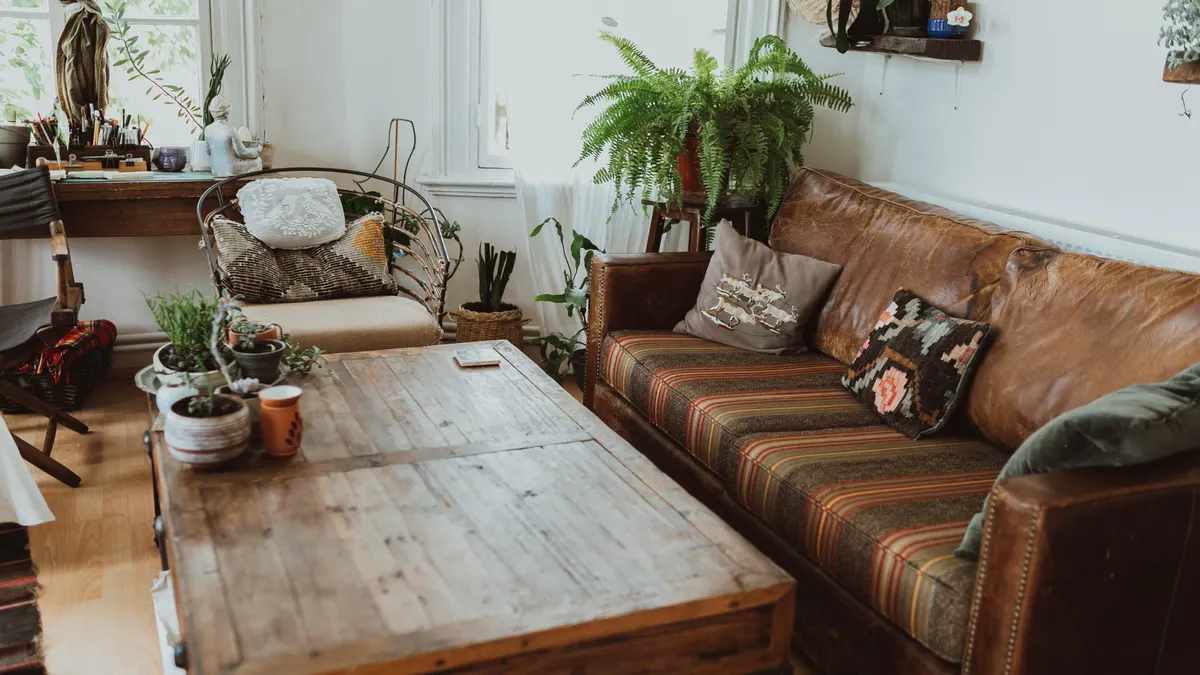
Boho Decorating Ideas for a Layered, Collected Look work best when they look gathered over time, not bought in one shot. Quick answer: use 1 large anchor, 2 to 3 repeating materials, and 3 pattern scales at most. The trick is to stack texture, repeat a few colors, and keep one or two materials—like rattan, jute, and wood—doing the heavy lifting so the room feels relaxed instead of random.
Key takeaways
- Start with a quiet base, then add layers in 2 or 3 textures at a time.
- Repeat colors and natural materials so the room feels edited, not chaotic.
- Use one large anchor piece, like a jute rug or rattan chair, before adding smaller accents.
- Pattern should feel related, not identical: mix scale, not just print type.
- Low seating, plants, and soft textiles do most of the work in boho decor style.
- This look is not the best fit for a room that needs very crisp lines, formal symmetry, or almost no visual clutter.
What boho decor style is doing in the room
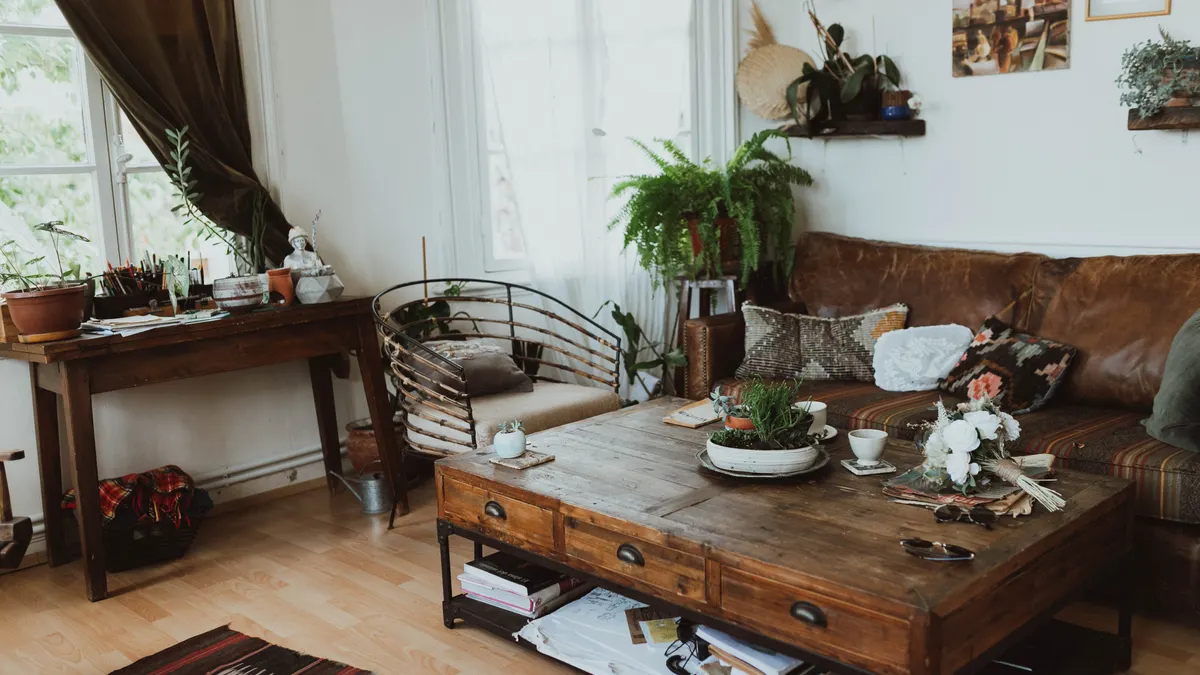
Boho decor style creates a layered, lived-in room by mixing natural materials, soft textiles, and relaxed silhouettes. It is not a rule-free style; it works when the mix looks intentional.
That distinction matters because a lot of boho rooms fail for one simple reason: they add too many unrelated things at once. The result is clutter, not character. A better version starts with a base of 2 or 3 repeated elements. Think warm wood, woven texture, and muted color. Then add a few more pieces that feel like they belong to the same story.
The style also depends on contrast. A room full of only soft items can look flat, while a room full of only hard furniture can feel stiff. A rattan chair beside a low linen sofa, or a jute rug under a patterned pillow, gives the eye something to move across. That is what makes the room feel collected rather than decorated from a single store display.
This style is a strong fit for people who like personal objects, handmade-looking details, and a room that can absorb new finds over time. It is not as effective for anyone who wants a minimalist, high-gloss, or highly symmetrical interior. If the goal is visual calm with almost no variation, boho is probably the wrong language.
For a bigger picture of how styles are organized into workable systems, the style-based decorating systems hub can sit above this guide without changing the core idea here.
How do I build the boho base without making the room busy?
Build the base with one grounded surface, one woven element, and one soft layer before adding anything decorative. That usually means a jute rug, a wood or rattan piece, and a textile such as a throw or cushion.
The easiest boho rooms are edited in this order:
- Place the largest visual anchor first. In a seating area, that might be a jute rug in a neutral tone, often in a 5-by-8-foot or 8-by-10-foot size depending on the room. The rug sets the color temperature and keeps the rest of the layers from floating.
- Add one furniture piece with natural texture. A rattan chair, cane-front cabinet, or wood side table gives the room a clear boho signal without needing extra decoration.
- Bring in soft textile weight. Use a patterned pillow, a cotton throw, or a floor cushion so the room stops feeling hard and echoey.
- Repeat one material at least twice. If you use rattan once, use it again in a lamp, tray, or chair. Repetition is what makes the look feel curated.
- Limit the number of dominant finishes to three. For example: wood, woven fiber, and matte ceramic. More than that, and the room starts to feel scrambled.
- Add plants last. A houseplant works best once the room already has structure; otherwise it can read like a filler item.
This base-building approach is especially useful in small rooms because it controls visual noise. It also works well in a rental, where you may not be able to change walls, floors, or built-ins. The room gets interest from layers, not from piling on every nice object you own.
Which materials make boho decorating ideas feel grounded?
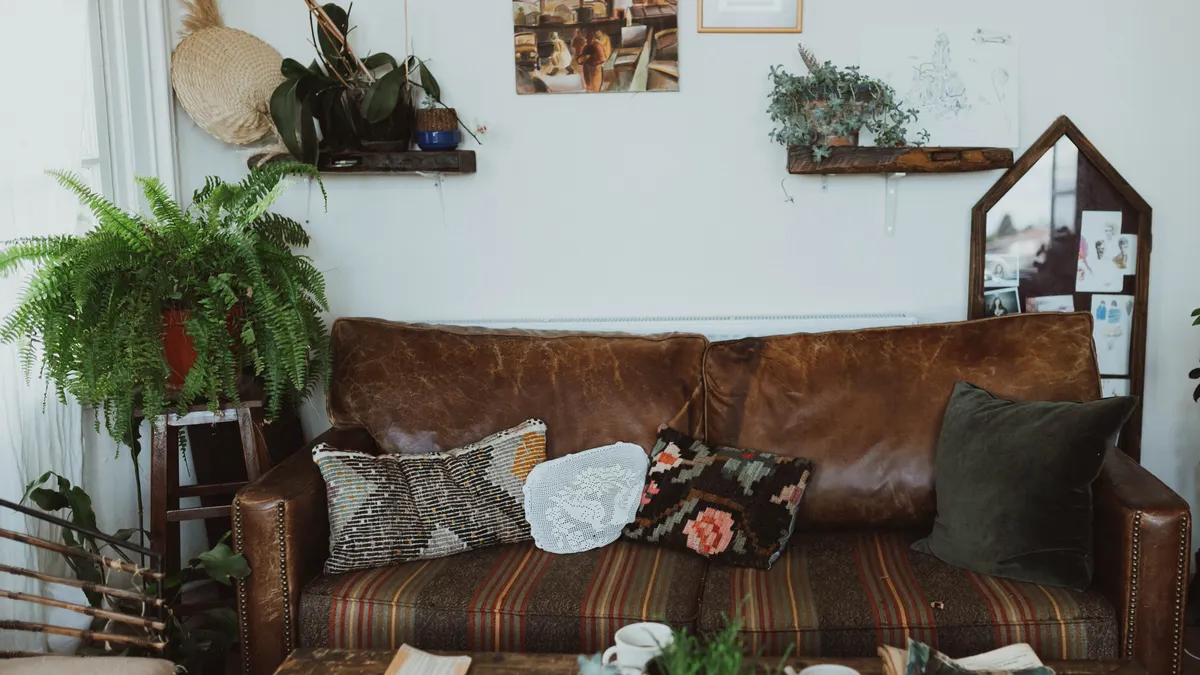
Natural materials make boho decorating ideas feel grounded because they bring texture, age, and warmth that painted surfaces alone cannot fake. A room with wicker, rattan, jute, linen, unfinished wood, and clay tends to look calmer than one built from shiny or overly uniform finishes.
The key is to choose materials with different jobs. Jute handles the floor and creates a broad matte field. Rattan and wicker add visible weave and shadow. Linen softens pillows and curtains. Wood gives weight. Ceramic breaks up all the fiber with a solid object that still feels handmade. When these materials are mixed well, the room reads as collected, not crowded.
A common mistake is to mix too many similar natural textures. Five woven pieces in the same color can blur together and lose definition. Instead, pair rough with smooth and open weave with closed surfaces. A rattan chair beside a glazed lamp base has more clarity than three baskets and two macramé pieces all in one corner.
Scale matters too. A small woven bowl does not do the same job as a full-size chair, and a tiny accessory cannot carry the room. Use one or two larger natural elements to establish the tone, then support them with smaller ones. A jute rug under a low table has more impact than a handful of decorative trays.
If the room already has a lot of pattern, keep the materials simpler. If the room is mostly neutral, then the texture can do more of the work. That balance is the difference between boho and messy. The style is not about adding more things; it is about choosing materials that still make sense when seen together from across the room.
For more material ideas, see the natural materials guide and the jute rug buying guide.
How do I mix patterns in boho decor without losing control?
Mix patterns by varying scale, repeating one color family, and letting one print lead while the others support it. A safer boho formula is one large-scale pattern, one medium pattern, and one small accent pattern.
Start with a patterned pillow or two. One pillow might carry a bold motif; the second should be quieter or more geometric. If the sofa or chair already has a strong texture, keep the pillow print simpler. A striped textile, a faded tribal-inspired pattern, or a block-print look can work, but they need a common thread such as rust, clay, olive, indigo, or ochre.
The floor can help control the mix. A jute rug is useful because it brings texture without adding another active pattern. That leaves the textiles to carry the visual interest. If the rug is patterned, the pillows should be more restrained. If the rug is plain, the pillows can be more expressive.
Use this rule: every pattern should have a reason to be in the room. If a pillow has cool blue lines, echo that blue in a vase, art print, or throw. If a pattern introduces too many unrelated colors, it becomes the loudest object in the space and breaks the collected feeling.
A mistake I would avoid is mixing several bold prints at the same visual weight. That creates competition, not layering. Another trap is using too many high-contrast black-and-white patterns, which can push the room away from boho and toward graphic modern style. Boho usually looks better when the contrast is softened a little.
The easiest way to know if the pattern mix is working is to step back 8 or 10 feet. If the eye jumps around and cannot settle, reduce one pattern or mute one color.
Where should I use low seating, floor cushions, and a rattan chair?
Use low seating where you want the room to feel relaxed, social, and unpretentious. A floor cushion, pouf, or rattan chair lowers the visual center of the space and makes the layering feel more boho immediately.
Low seating works because it changes the room’s posture. Instead of everything standing upright and formal, the furniture starts to feel gathered around a conversation or a reading spot. A rattan chair can handle the main seating role, while a floor cushion gives you a flexible extra seat or footrest. A pouf in woven fabric can do both jobs.
One rattan chair in a corner can look decorative; two positioned at an angle near a rug look intentional. A single floor cushion against a wall often reads as forgotten, while a pair near a coffee table or side table looks planned. If the room is large, low seating can help break up the height of tall ceilings. If the room is small, keep the footprint modest so the space does not feel crowded at ankle level.
Use low seating to soften harder pieces. A straight-backed sofa, a square coffee table, or a clean-lined cabinet can all feel more approachable when paired with one relaxed chair and a textile underfoot. The room needs that tension.
The limitation is practical: floor cushions are not ideal for every body or every household. If someone needs firm back support or frequently gets up from seated positions, rely more on a proper chair and use the cushion as an accent, not the main seat. Boho should feel easy to live with, not like a performance of casualness.
How do plants finish the layered, collected look?
Plants finish the layered, collected look by adding height, softness, and a living shape that keeps the room from feeling too static. A houseplant should read as part of the composition, not as an afterthought in an empty corner.
One good plant can do more than several small ones. A tall plant in a woven basket, a trailing plant on a shelf, or a medium plant on a stool each changes the room differently. The goal is to vary the silhouettes. Upright leaves, rounded leaves, and draping vines all create different rhythms. That variation helps the layered look feel natural.
Use containers carefully. A plain nursery pot can work if it is hidden inside a basket, clay planter, or ceramic cachepot. The container should match the rest of the room’s material story. A shiny planter often looks disconnected in a boho setting, while a terracotta or woven cover usually fits more easily.
Plants should also balance the visual weight of textiles and furniture. If the room has a lot of pattern below eye level, place a plant higher up on a stand or shelf. If the room feels bare above the sofa or chair line, let the plant rise there instead. That keeps the whole room from sitting at one flat height.
A common mistake is using too many tiny plants, which can make the room feel crowded and fussy. Another is choosing a plant only for color without thinking about shape. In boho decor style, shape matters as much as leaf tone. One plant with a strong form usually does more than three weak ones.
For placement ideas, see the indoor plant styling guide and the plant pot guide.
What to leave out if you want boho to stay curated
Leave out anything that competes for attention without contributing texture, color rhythm, or a clear material connection. That means too many novelty objects, too many unrelated colors, and too many small accessories crowding every surface.
The cleanest boho rooms usually have a few absences. They do not need a dozen tiny knickknacks, a different pattern on every chair, or multiple statement pieces fighting for the same wall. They also do not need everything to look distressed. Age and wear can help, but fake roughness everywhere makes the room feel staged.
This is where restraint pays off. If you already have a patterned pillow, a jute rug, a rattan chair, a floor cushion, and a houseplant, you probably do not need another dramatic object in the same zone. One strong piece per surface area is usually enough. Let empty space sit between the layers so the eye can register them.
The biggest trade-off with boho is that the style can become visual noise if every item is equally interesting. To avoid that, pick one main visual story per room area: maybe woven texture in the seating area, plants near the window, and softer pattern near the sofa. That gives the room a direction.
Boho decorating ideas work when the room feels assembled with patience. If every item has a material reason to be there, the result looks collected. If every item is trying to speak at once, it looks accidental. The difference is not how much you add. It is how clearly the layers relate to one another.
What makes a room boho?
A boho room usually combines relaxed furniture, natural materials, layered textiles, and a mix of patterns that share a similar mood. A jute rug, rattan chair, patterned pillow, and houseplant can all point in that direction. The look depends on texture and a collected feel more than on any single object.
How do i decorate boho without it looking messy?
Decorate boho without it looking messy by repeating a few materials and limiting how many patterns compete at once. Start with a neutral base, then add one strong texture, one soft layer, and one plant. Leave some open space on shelves and floors so the layers can breathe instead of crowding each other.
What colors are used in boho decor?
Boho decor usually leans on warm neutrals and earthy tones such as cream, tan, rust, clay, olive, and brown. Muted blues or deeper jewel tones can also work if they are repeated in more than one place. The palette feels most boho when the colors look sun-warmed rather than bright and glossy.
Drafted with AI; not yet reviewed by a person.